Anti-Inflammatory Indian Diet (2026 Guide)
Anti Inflammatory Indian Diet: What To Actually Eat Daily If Your Joints Are Tired Of Your Nonsense

If you’re under 40 and your knees already make that crunchy sound on stairs, welcome.
Your joints have started sending feedback, and they’re not subtle about it.
Rheumatologists, sports docs, and even health insurers now give the same dietary script: more plants, better fats, fewer ultra-processed foods, less sugar, less “all fried everything”
Ayurvedic writers say the same thing with better metaphors: calm vata, reduce ama (gunk), warm, nourishing food, joint-friendly spices and oils.
This isn’t about eating turmeric once and never needing painkillers again.
It’s about using your everyday Indian meals as background support, so your joints don’t have to fight every single thing on your plate.
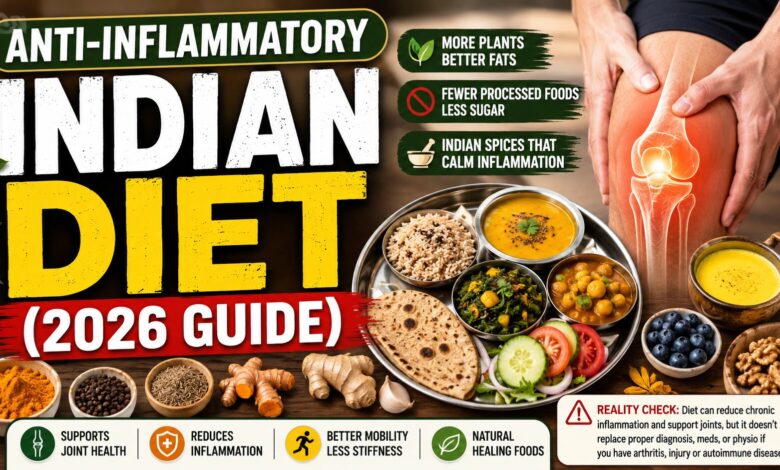
Reality check: Diet can reduce chronic inflammation and support joints, but it doesn’t replace proper diagnosis, meds, or physio if you have arthritis, injury or autoimmune disease.
THE THING NOBODY ACTUALLY SAYS OUT LOUD
Nobody says this loudly because it ruins the vibe, but here goes:
Your joints are not mad at ageing. They’re mad at your lifestyle.
Most “joint pain” articles politely talk about age, genetics, weather, and maybe weight.
What they underplay is that chronic, low-grade inflammation is strongly linked to what you do all day:
- what you eat,
- how much you move,
- how badly you sleep,
- and whether your body weight is crushing your knees or not.
Anti-inflammatory diet guides global and Indian repeat the same pattern:
- Eat more:
- fruits and vegetables (especially coloured ones and leafy greens),
- whole grains (oats, brown rice, millets, whole wheat),
- legumes and dal,
- nuts and seeds (walnuts, flax, chia, almonds in sensible amounts),
- healthy fats (mustard oil, groundnut oil, olive oil, a bit of ghee),
- fatty fish like salmon/sardines/mackerel for omega‑3 (if you eat fish).
- Eat less:
- refined carbs (maida, white bread, sugary breakfast cereals),
- processed meats, excess red meat,
- deep-fried stuff, fast food, packets of namkeen and chips,
- sugary drinks, sweets, pastries, high-sugar desserts.
The Mediterranean-style pattern lots of plants, whole grains, olive oil, nuts, seeds, fish, minimal junk is heavily studied for arthritis and joint health.
Indian dietitians now basically say: “Do that, but with dal, sabzi, millets and mustard oil.”
Ayurveda comes in and says:
- warm, cooked, lightly spiced meals;
- spices like turmeric, ginger, cumin, cinnamon, garlic;
- avoid cold, heavy, processed, very sour or very oily food that increases vata and ama.
The line that would cause a riot if printed on a chips packet:
If your daily diet is sugar, refined carbs, fried snacks and absurd portions, no amount of “golden latte” is going to save your joints.
Real people with less joint pain are not living on magic seeds.
They’re just not hitting their body with small inflammatory insults all day, every day.
HOW THIS ACTUALLY WORKS THE REAL MECHANICS
Let’s decode “anti-inflammatory” into something more useful than “eat colourful food and hope”.
1. What inflammation has to do with your dinner
Chronic inflammation is like your body’s fire alarm stuck on low volume.
Not enough to put you in hospital immediately, but enough to slowly damage joints, blood vessels and tissues.
Diet affects that in a few key ways:
- Omega‑3 vs omega‑6 fats:
- omega‑3 (fish, flax, chia, walnuts) tends to dampen inflammation;
- too many inflammatory fats (certain seed oils, trans fats, fried junk) push it up.
- Antioxidants and polyphenols:
- fruits, vegetables, herbs, spices, tea, etc., carry compounds that reduce oxidative stress and inflammatory markers.
- Refined carbs and sugar:
- high-sugar, high-refined-carb diets mess with blood sugar and insulin, and are associated with higher inflammatory markers.
- Weight:
- extra fat tissue, especially around the belly, pumps out inflammatory molecules and literally increases the load on your joints.
So an anti-inflammatory Indian diet is basically:
- less “fast spikes and fried stuff”,
- more “slow carbs, colours, good fats and spices”,
- plus portion control so your knees aren’t carrying your lifestyle.
2. Indian foods that actually help calm inflammation
Multiple Indian anti-inflammatory diet plans and arthritis guides highlight a cluster of foods:
- Spices: turmeric (curcumin), ginger, garlic, cinnamon, black pepper, cumin, coriander all repeatedly described as anti-inflammatory.
- Leafy greens & veg: spinach, methi, sarson, cabbage, broccoli, carrots, peppers, beets, gourds.
- Whole grains: millets (ragi, jowar, bajra), brown rice, oats, whole wheat.
- Legumes: dal, chana, rajma (if your gut likes it), peas, soy protein and fibre both help weight and inflammation control.
- Healthy fats: mustard oil, groundnut oil, olive oil, small amounts of ghee; nuts and seeds like walnuts, flax, chia, almonds.
- Fruits: berries, grapes, pomegranate, oranges, amla, apples, papaya antioxidant and vitamin-rich.
- Curd/yogurt and buttermilk: to support gut health, which indirectly affects inflammation.
READ ALSO: Why Most Indian Weight Loss Diets Fail (2026)
Ayurvedic joint-pain content adds:
- warm soups, khichdi, lightly spiced veggies, a bit of ghee,
- avoiding cold salads from the fridge, iced drinks, heavy-at-night food that worsens vata.
3. What you need to cut back if you want your joints to stop sulking
Indian and global arthritis/anti-inflammatory diet sources are brutally consistent on the “nope” list:
- Processed and packaged foods: instant noodles, ready-to-eat curries, processed cheese slices, chips, namkeen, biscuits, etc.
- Sugary things: sweets, desserts, sugary drinks, high-sugar breakfast cereals, sweet tea/coffee all day.
- Refined carbs: white bread, maida parathas, naan, many bakery items.
- Trans fats and deep-fried food: street fried snacks, fast food, repeated oil use.
- For some people: nightshade veg (tomatoes, potatoes, brinjal, capsicum) and dairy can worsen pain, especially in Ayurveda frameworks so they suggest testing your own response.
The modern arthritis foundations keep name-dropping the Mediterranean diet as their favourite template.
Indian versions just translate that into dal + 2 sabzis + salad + millet/roti + curd + nuts and seeds, with less junk.
4. The niche corner: anti-inflammatory Indian diet for young-ish joints
Most arthritis diet articles imagine a 60-year-old.
But Indian rheumatology and wellness content now quietly acknowledges: 20- and 30-somethings are showing up with early joint issues because of weight, autoimmunity, injuries + desk jobs + zero movement.
For you, the niche angle is:
- You need anti-inflammatory food and enough protein for muscle and recovery.
- You probably still want taste and social life, not boiled sadness.
- You may actually try this long enough for it to matter.
That’s where an Indian Mediterranean-style pattern with strong Ayurvedic spice support shines:
- real meals (not shakes),
- enough dal/curd/eggs/fish for strength,
- spices and oils that support long-term,
- junk, sugar and deep-fry demoted from “daily” to “occasional”.
So no, you don’t need fancy imported stuff. You need your grandmother’s logic, your rheumatologist’s evidence, and your own discipline on the same plate.
COMPARISON WHAT’S ACTUALLY DIFFERENT BETWEEN YOUR OPTIONS
Common Anti-Inflammatory Approaches People Try
| Option | What it actually does | Who it’s for | The catch |
| “Just take turmeric tablets” approach | Adds one anti-inflammatory spice; may help a bit. | People who want a hack, not a lifestyle shift | If the rest of your diet is trash, effects are tiny. |
| Generic “eat healthy, less fried” | Reduces obvious junk, may lower weight and inflammation somewhat. | Those starting from zero awareness | Too vague; easy to drift back into processed food and constant sugar. |
| Mediterranean-style Indian pattern | High in plants, good fats, fish/legumes; evidence-backed for arthritis. | People ready to change how they stock and cook at home | Needs consistent meal planning and family buy-in. |
| Strict Ayurvedic “joint pain” diet | Warm, cooked, lightly spiced foods; avoids vata-aggravating, heavy, cold items. | Those who resonate with Ayurveda & routine | Can feel restrictive; you still need protein and calories balanced. |
If you actually want less pain and more function, I’d pick the Mediterranean-style Indian pattern as the base (more plants, dal, nuts, good fats, less junk), then add Ayurvedic rules about warmth, spices and avoiding cold/heavy food on top. Supplements and herbs are garnish. Your plate is the main act.
READ ALSO: Triphala for Weight Loss & Digestion (2026 Guide)
WHAT ACTUALLY HAPPENS WHEN YOU TRY THIS
When you genuinely try an anti-inflammatory Indian diet, the first thing that changes is how your kitchen looks, not how your knees feel.
Day one looks suspiciously like the sample plans in Indian anti-inflammatory guides:
- Morning: warm water with lemon or turmeric, or ginger-fennel drink if you’re in your Ayurveda era.
- Breakfast: veg upma or poha with peanuts, veggie oats, besan or moong chilla, or idli–sambar cooked in minimal oil, with actual vegetables, not just potatoes.
- Mid-morning: fruit apple, orange, seasonal berries, pomegranate, or papaya instead of second sugary chai.
Lunch shifts from “mountain of white rice + thick, oily curry + zero salad” to:
- 1–2 multigrain/millet rotis or a small portion of brown rice,
- 1 bowl dal/rajma/chana (if your gut handles it),
- 1–2 sabzis (one leafy, one mixed),
- salad,
- curd or buttermilk.
Evening snacks stop being biscuits-and-chips by default. Instead you see:
- roasted chana, sprouts chaat, fruit, nuts/seeds, hummus with veg sticks, or a small homemade chilla.
Dinner becomes a lighter copy of lunch with less grain:
- more sabzi, dal or a fish/egg dish, fewer rotis, little to no fried sides, and ideally eaten before 9 pm.
What surprised me watching people actually stick to this for a couple of months:
- Pain didn’t vanish, but “background stiffness” reduced mornings felt less like waking up in a 70‑year-old body.
- Weight dropped slowly if they also controlled portions and walked and that alone made stairs and squats much more tolerable.
- Their energy was steadier; less sugar crashing meant fewer “I’m too tired to move” excuses, which ironically gave their joints more motion and better lubrication.
Pattern most listicles miss:
- It’s not one magical food; it’s the ratio.
- When 70–80% of your weekly meals are anti-inflammatory (plants, dal, good fats, fewer refined carbs), your system can handle the occasional biryani or dessert without screaming.
You also realise how much your joints like routine:
- eating at vaguely similar times,
- not skipping breakfast and then doing a 1,200‑calorie dinner,
- getting even 20–30 minutes of walking or yoga most days.
Nothing dramatic happens on day 3.
But somewhere around week 4–6, you notice your body complaining less loudly about basic life.
THE ADVICE EVERYONE GIVES VS WHAT ACTUALLY WORKS
“Just take turmeric and you’ll be fine.”
Turmeric (curcumin) is genuinely anti-inflammatory.
It inhibits inflammatory pathways and is used in a lot of joint-pain supplements and Ayurveda formulas.
But a tiny sprinkle on your nightly Maggi isn’t going to reverse everything.
Real impact shows up when turmeric is part of a whole pattern daily use in cooking, sometimes supplements, combined with a diet that doesn’t constantly push the inflammation button.
“Just avoid nightshades and your arthritis will disappear.”
Ayurvedic and some functional-medicine sources do say nightshades (tomatoes, potatoes, brinjal, peppers) can aggravate joint symptoms in some people.
Some individuals swear that cutting them reduces pain. Others notice absolutely no difference.
The bigger, more consistent villains in mainstream arthritis diets are ultra-processed foods, trans fats, excess sugar and refined carbs, and low plant intake.
Better approach: test nightshades if you’re curious, but don’t ignore the obvious junk while obsessing over one sabzi.
“Go completely vegan or completely keto; that will fix inflammation.”
Both extremes can help some people, usually for specific reasons (weight loss, fewer trigger foods, less processed junk).
But arthritis orgs and Mediterranean-diet research mostly support a balanced, plant-forward, moderate pattern with fish, legumes, whole grains and good fats.
Super low-carb or super restrictive plans can be hard to sustain, socially isolating, and not necessary if what you really needed was: less sugar, less fried food, more plants, more movement.
“Diet doesn’t really matter, just take your painkillers.”
Short-term, sure NSAIDs can make you forget your knees exist.
Long-term, though, inflammation, weight, blood sugar, gut health and recovery absolutely respond to diet.
Opinion: painkillers are like muting your phone. Diet and lifestyle are fixing the issue so the calls reduce. You probably need both, but pretending food is irrelevant makes zero sense.
THE PRACTICAL PART WHAT TO ACTUALLY DO
1. Build a simple “joint-friendly plate” rule
For lunch and dinner, use this base:
- ½ plate: vegetables (at least two types, one leafy if possible).
- ¼ plate: whole grain (millet roti, brown rice, multigrain roti, quinoa, or a good mix).
- ¼ plate: protein (dal, chana, rajma, tofu, paneer in moderation, fish, eggs or lean chicken).
Add 1–2 tsp healthy fat (mustard/groundnut/olive oil or a bit of ghee) and liberal turmeric/ginger/garlic.
2. Lock in 3–4 anti-inflammatory Indian breakfasts
Pick options that show up in actual Indian plans:
- veg upma with peanuts and veggies,
- poha with peas and peanuts,
- daliya with vegetables and some curd on the side,
- oats cooked with veggies + egg whites or sprouts,
- besan/moong chilla with chutney and salad.
The rule: some whole grain + some protein + some veg + minimal sugar.
3. Put hard rules on sugar and packaged junk
Not “I’ll eat less,” actual rules:
- no sugary drinks at home (colas, energy drinks, packaged juices),
- biscuits, namkeen and chips are “once in a while, bought in small packs,” not daily background noise,arthritis+5
- sweets reserved for actual occasions, not stress.
Your joints will never see those foods, but they will absolutely feel their absence over time.
4. Add omega‑3s the realistic Indian way
If you eat fish:
- aim for 2 servings/week of fatty fish like salmon, mackerel, sardines.
If you’re veg:
- 1–2 tbsp flax/chia seeds daily (ground flax is easier to use),
- a handful of walnuts a few times a week.
Omega‑3 intake is one of the most consistent “this helps inflammation” levers you have.
5. Make spices do actual work, not just colour
Every day, somewhere on your plate, you want:
- turmeric + black pepper combo,
- ginger,
- garlic,
- cumin, coriander, cinnamon to taste.
Use them in dal tadka, sabzis, soups, kadha-style drinks not just as a once-a-week turmeric latte for Instagram.
6. Align with 2–3 Ayurvedic “joint” rules you can live with
Realistic ones from joint-pain Ayurveda content:
- favour warm, cooked food over cold/raw straight-from-fridge meals,
- avoid very heavy, oily, super late dinners,
- sip warm water or herbal teas (ginger/fennel) through the day,
- include a bit of ghee or warm oil massage (abhyanga) on bad days if it feels good.
It’s less mystical when you see it as: “don’t shock your system; keep digestion smooth; improve circulation.”
QUESTIONS PEOPLE ACTUALLY ASK
What is the best anti-inflammatory Indian diet for joint pain?
The most useful pattern is a Mediterranean-style Indian diet: lots of vegetables and fruits, whole grains (millets, brown rice, oats, whole wheat), dal and legumes, nuts and seeds, healthy oils (mustard/groundnut/olive), and fatty fish or plant omega‑3s.
It cuts back on processed food, refined flour, sugar, deep-fried snacks, and excess red or processed meat.
Ayurvedic tweaks like warm foods and joint-friendly spices layer nicely on top.
Which Indian foods reduce inflammation and joint pain naturally?
Daily helpers include turmeric, ginger, garlic, cinnamon, leafy greens, colourful vegetables, fruits (especially berries, pomegranate, citrus), dal and legumes, walnuts, flax/chia seeds, curd/yogurt, and fatty fish like salmon or mackerel.
These foods bring antioxidants, fibre, omega‑3 fats and phytonutrients that can help lower inflammatory markers.
The impact is cumulative when they are part of your daily pattern, not occasional add-ons.
READ ALSO: Intermittent Fasting With Indian Food (Complete Guide 2026)
What Indian foods should I avoid for joint pain?
You’ll want to sharply limit ultra-processed snacks (chips, namkeen, biscuits), fast food, frequent deep-fried items, refined flour (maida rotis, white bread, naan), sugary drinks, sweets and desserts.
Some Ayurvedic sources also suggest testing your response to nightshade veggies (tomatoes, potatoes, brinjal, peppers) and heavy dairy, as they may worsen symptoms in certain people.
Focus first on the obvious junk before stressing over one sabzi.
Can an anti-inflammatory Indian diet replace arthritis medication?
No.
Diet can support lower inflammation, weight control, and better overall health, but it does not magically reverse structural joint damage or autoimmune activity.
Doctors usually recommend using food changes alongside medications, physio and activity, and sometimes they can lower doses once things stabilise.
Is ghee allowed on an anti-inflammatory diet?
Yes, in small amounts.
Indian anti-inflammatory and Ayurveda content often includes a little desi ghee for warmth, joint lubrication and satiety, but within a context of mostly healthy fats.
Think 1–2 teaspoons a day in home cooking, not ghee on everything plus fried food and junk.
Are vegetarian anti-inflammatory diets effective for joint pain?
They can be.
A well-designed vegetarian diet with plenty of vegetables, fruits, whole grains, dal, legumes, nuts, seeds, curd/yogurt and good oils fits anti-inflammatory principles very well.
You just need to ensure enough protein (dal, soy, paneer, curd, nuts) and omega‑3 sources like flax, chia and walnuts.
How long does it take to feel a difference in joint pain after changing diet?
It varies, but many people notice changes in general stiffness, energy and flare frequency within 4–12 weeks of consistent eating and better weight/activity habits.
It’s not an overnight fix, and bad sleep, stress and inactivity can still trigger pain even on a good diet.
Think of it as slow background support rather than an instant painkiller.
Which Ayurvedic foods and herbs help for joint pain?
Ayurvedic sources highlight turmeric, ginger, garlic, cumin, coriander, guggul, Boswellia, ashwagandha, and sesame oil or ghee, along with warm, cooked, easy-to-digest meals.
They warn against cold, heavy, processed and very oily foods, and often suggest simple khichdi, soups and lightly spiced sabzis as everyday staples.
Herbs should ideally be chosen with a practitioner, especially if you’re on other medication.
SO WHERE DOES THIS LEAVE YOU
If your joints hurt often enough that you’re reading about diet, you already know this isn’t just “one bad workout”.
It’s a longer story: years of under-sleeping, over-sitting, comfort-eating and pretending “I’m too young for this” is a health strategy.
The good news is annoyingly simple: the same pattern that helps your joints also helps your heart, gut, brain and weight a plant-heavy, minimally processed, spice-rich Indian diet with sane portions and some omega‑3, plus movement and sleep that aren’t a joke.
If you want one thing to start today:
Tonight, eat a plate that is half vegetables, a quarter dal or other protein, and a quarter whole grain; cook it in mustard/groundnut/olive oil with turmeric and ginger, skip the fried side + dessert, and go for a 20‑minute walk after. Do that 10 dinners in a row.
It won’t magically erase old damage.
But it will give your joints one very clear signal: you’ve stopped fighting them at the dinner table, and started backing them instead.
You made it through an entire article on anti-inflammatory food instead of just asking which tablet to take, which already says a lot about whose side you’re on.
You don’t need to eat like a saint; you just need your “usual” to stop being quiet sabotage and start being low-key support.
If you can let dal, vegetables, spices and decent fats become the rule and junk become the exception your knees will eventually get the memo.
__________________________________________________________________________
EDITOR NOTE: This article should link internally to articles about “7-Day Anti-Inflammatory Indian Meal Plan for Arthritis,” “Beginner-Friendly Joint Mobility and Strength Routine for Stiff Bodies,” and “Ayurvedic Herbs for Joint Pain: What Science Says and How to Use Them Safely.”