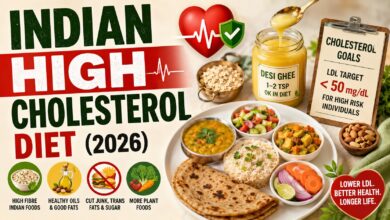
Heart-Healthy Indian Diet: What Cardiologists Actually Want You To Eat
Indian cardiologists are tired.
Not from stents. From explaining, for the 900th time, that “no oil” does not mean you can keep eating namkeen and cake and call it a heart diet.
Every decent cardiology clinic now repeats the same surprisingly boring pattern:
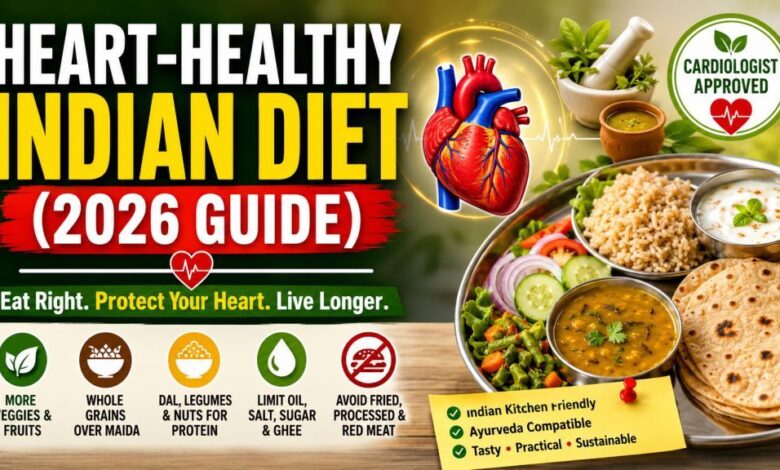
- more vegetables and fruits,
- whole grains instead of maida and polished rice,
- dal, legumes and nuts for protein and fibre,
- limited oil, ghee, sugar, and salt,
- very little red/processed meat, fried food, or packaged snacks.
Global heart-health advice just adds a fancy label: Mediterranean-style vegetables, whole grains, pulses, nuts, and healthy fats as the foundation. Ayurveda? It nods along with all of this, only with more lauki juice, old rice, barley and a sermon about kapha + ama.
This guide is the overlap: cardiologist-approved, Indian kitchen–friendly, and Ayurveda-compatible, for people who still like actual food.
Usual disclaimer: This is guidance, not your personal prescription. If you’ve had a heart attack, stent, bypass, diabetes, kidney disease, or are on multiple meds, you absolutely need your cardiologist/dietitian to personalise this.
THE THING NOBODY ACTUALLY SAYS OUT LOUD
Nobody says it this plainly, so let’s do it:
You did not land in a cardiologist’s office because you ate ghee once.
You landed there because of years of… everything.
Indian heart patients usually arrive with the whole combo pack:
- refined carbs (white rice, maida roti, bread, bakery),
- fried food and snacks,
- sugary chai 3–4 times a day, cold drinks, sweets, desserts,
- low fibre, barely any salads/fruit,
- very little movement, a lot of stress.
Doctors keep saying:
- heart disease risk tracks with LDL cholesterol, blood pressure, blood sugar, inflammation, and central obesity,
- and all of those respond very clearly to diet and lifestyle, not just tablets.
Cardiologist-approved Indian diet charts look suspiciously like common sense dressed in a hospital logo:
- base meals on vegetables, fruits, whole grains, dals and legumes, healthy oils in small amounts, nuts, and low-fat dairy.
- switch to heart-friendlier oils (rice bran, mustard, groundnut, or olive) and cut quantities down.
- slash packaged snacks, fast food, sugary drinks and excess salt.
Global guidelines for Mediterranean-style heart diets add:
- lots of vegetables and fruits,
- whole grains and legumes,
- olive oil and other unsaturated fats,
- fish a couple of times a week,
- minimal red and processed meat,
- minimal added sugar.
Ayurvedic heart-diet content, from clinics and classical-style sources, says nearly the same thing in different words:
- old rice, wheat, barley, lentils like moong and masoor, gourds and leafy veg, fruits, spices like turmeric, cinnamon, garlic, methi, and soaked almonds and walnuts.
- avoid new rice, maida, urad dal, heavy fried foods, stored/processed foods, excess salt, alcohol, non-veg, eggs, and late heavy meals.
Here’s the line nobody prints in big letters:
If you are still pouring half a katori of oil in sabzi, eating namkeen daily, drinking sweet tea all day and barely moving, your “oats for breakfast” is not a heart-healthy diet.
Also: “I’m vegetarian” does not make you heart-proof.
A vegetarian diet based on maida, potatoes, sweets, fried food, and zero fibre is still a red carpet for stents.
So the real truth is boring and brutal:
Your heart-friendly diet is not about one magic food. It’s how your plate looks most days of the year.
HOW THIS ACTUALLY WORKS THE REAL MECHANICS
Let’s translate “heart-healthy” into what actually happens to your arteries and blood, not just your Instagram.
Read Also: Fatty Liver Diet Plan for Indians (2026)
1. Arteries, fat, sugar and inflammation
Cardiologists and big heart foundations say the same thing: blocked arteries and heart disease involve cholesterol deposits (especially LDL), damaged vessel walls, high blood pressure, high blood sugar, and chronic inflammation.
Diet affects all of those by:
- the type and amount of fat you eat (saturated, trans vs unsaturated),
- how much fibre you get,
- how much sugar and refined carb you pour into your system,
- total calories and your weight around the belly.
So when they push “heart-healthy Indian diet,” it’s really:
- more fibre,
- more unsaturated fats,
- less saturated/trans fats,
- less sugar and refined carb,
- less salt,
- fewer calories if you need to lose weight.
2. What cardiologists actually want you to eat more of
Look at Indian cardiology and hospital diet charts and you see the same “green list” over and over:
- Vegetables: 2–4 servings at least sabzi, salad, soups; bright colours and greens.
- Fruits: 1–3 servings apples, guava, papaya, citrus, berries, pomegranate; portion-control if diabetic.
- Whole grains: brown/red rice, oats, daliya, whole wheat, millets (jowar, bajra, ragi); not just polished white rice and maida.
- Dals and legumes: moong, masoor, chana, rajma, soy, peas high fibre, low fat, great for cholesterol and sugar control.
- Healthy fats: small amounts of mustard, groundnut, rice-bran or olive oil; nuts like almonds and walnuts; flax or chia seeds.
- Lean proteins: fish, skinless chicken, egg whites, low-fat paneer, curd, Greek-style yogurt.
- Low-fat dairy: toned/skim milk, low-fat curd, limited paneer/cheese.
- Heart-friendly spices: garlic, turmeric, methi, cinnamon, ginger, coriander, cardamom these show up a lot in Ayurvedic and modern content alike.
Mediterranean-style guidelines globally say almost the same thing, just with more olive oil and olives.
3. What they want you to cut down hard
The “red list” is equally repetitive across cardiology clinics, insurance blogs, and Ayurvedic diet plans:
- Deep-fried food: pakodas, samosas, kachori, pooris, fries, bhaturas, fried snacks.
- Packaged snacks and fast food: chips, namkeen, instant noodles, burgers, pizzas, biscuits, processed baked goods.
- Refined carbs: maida-based rotis, bread, bakery items, white rice as the only grain.
- Sugary things: sweets, desserts, excessive sugar in tea/coffee, cold drinks, packaged juices, energy drinks.
- Red and processed meats: sausages, bacon, salami, processed kebabs, frequent red meat.
- High-fat dairy & ghee overload: cream-heavy gravies, butter mountains, lots of ghee, full-fat cheese every day.
- Salt: excess pickles, papad, processed foods; many Indian heart diets cap total salt around ½ tsp rock/regular salt per day for high-risk patients.
Ayurvedic heart diets literally blacklist new rice, maida, urad dal, heavy non-veg, leftover oily food, alcohol, and cold/stale food.
4. The Mediterranean-style Indian angle (the niche others ignore)
Harvard and heart associations talk up the Mediterranean diet for heart disease: lots of veg, whole grains, beans, nuts, seeds, olive oil, moderate fish, little red meat, minimal sugar.
Indian cardiologists and researchers have adapted this as:
- dal + sabzi as the “bean + veg” core,
- whole wheat and millets as the “whole grain”,
- mustard/rice-bran oil or olive oil as the main fat,
- fish or small chicken portions a few times a week for non-veg folks,
- nuts and seeds most days,
- rare red meat, rare sweets and fried food.
Translation: a cardiologist-approved Indian diet is essentially a Mediterranean pattern in a steel thali.
COMPARISON WHAT’S ACTUALLY DIFFERENT BETWEEN YOUR OPTIONS
Common “Heart Diet” Approaches People Try
| Option | What it actually does | Who it’s for | The catch |
| “No oil” but same junk | Reduces some fat but keeps sugar, maida, snacks, and salt intact. | People who want one easy rule | Cholesterol and weight may barely change; cravings stay. |
| Generic low-calorie Indian diet | Can drop weight if followed, helping BP and lipids somewhat. | Short-term dieters | Often not focused on quality of fats, carbs, or fibre. |
| Cardiologist-style heart-healthy diet | Focused on whole grains, veg, dals, nuts, good oils, low sugar/salt. | Anyone with risk factors or diagnosed heart disease | Needs cooking changes and family buy-in. |
| Mediterranean-style Indian adaptation | Evidence-backed for heart health; Indianized with dals and millets. | People ready for sustainable, moderate eating | Not flashy; results show up over months, not 7 days. |
| Strict Ayurvedic sattvic heart diet | Light, low-salt, low-fat, warm, plant-heavy; supports Kapha/Pitta. | Those who like Ayurveda & routine | May feel too restrictive socially; still needs medical monitoring. |
If you’ve had a cardiac event or have strong risk factors, the smart middle is: Mediterranean-ish Indian (dal + sabzi + whole grain + nuts + good oil) with modern salt and fat limits, plus some Ayurvedic timing/spice tweaks. You don’t need boiled sadness. You need consistent, sane meals.
Read Also: 3,000-Calorie Weight Gain Plan for Skinny Indians (2026)
WHAT ACTUALLY HAPPENS WHEN YOU TRY THIS
When you actually do the “heart-healthy Indian diet” and not just say it, the first shock is how much of your life ran on default oil and sugar.
Your day shifts toward what heart clinics and Ayurveda-style diets keep showing in their charts:
- On waking: warm water, maybe 5–6 soaked almonds and 4–5 walnuts.
- Breakfast: upma, poha, idli, veg oats, daliya, besan chilla, whole wheat thepla or chapati with sabzi cooked with little oil, plus milk/curd or egg whites.
- Mid-morning: seasonal fruit apple, guava, papaya, orange, berries if you’re fancy or a small plate of fruit salad.
Lunch stops being “mountain of rice + thick oily gravy + no salad” and starts looking more like:
- 1–2 thin multigrain rotis or a small bowl of brown/red rice,
- one bowl dal (moong, masoor, chana, etc.),
- one bowl cooked veg,
- one plate salad,
- curd.
Evening snacks shift from biscuits and namkeen to:
- sprouts chaat, boiled chana, puffed rice bhel, boiled corn, veg soup, fruit, nuts, or low-fat yogurt all over hospital handouts.
Dinner becomes a lighter echo of lunch:
- 2 thin rotis or small khichdi portion,
- sabzi + dal or curd,
- small salad,
- minimal oil and almost no fried side drama.
Ayurvedic-style heart diets add more rituals on top:
- ash gourd juice or lauki juice in the morning for some,
- strict salt cap (around ½ tsp per day in some plans),
- very little oil (1 tsp a day in severe cases),
- no leftover, canned, or reheated heavy food, alcohol, or non-veg.
What actually surprised me seeing people follow this for a few months (and not just after discharge):
- Triglycerides and LDL numbers slid down without any weird supplements just dal, oats, veg, nuts, better oil and less junk.
- BP stabilized better when salt really dropped and processed snacks disappeared. One cardiologist wasn’t kidding when he said “your pickle jar is basically a BP device.”
- Walking up stairs stopped feeling like a small exam. People didn’t become athletes, but “less breathless” showed up a lot.
The pattern most listicles never mention:
- It’s not only what you eat but how late dinners, skipped breakfasts, mindless snacking while stressed all strain the system.
- Social pressure is half the battle: relatives pushing second helpings, colleagues ordering heavy food, late-night work calls leading to late dinners.
When people drew even one or two hard lines “no fried snacks at home,” “no cold drinks,” “dinner by 8 pm,” “walk 30 minutes daily” the combination of diet + movement + meds started showing up in actual reports, not just vibes.
You don’t get a brand new heart.
You just stop abusing the one you have on a daily basis.
THE ADVICE EVERYONE GIVES VS WHAT ACTUALLY WORKS
“Just stop oil and ghee, you’re sorted.”
Oil and ghee matter they’re dense saturated and total fat.
Cardiac and Ayurvedic diets both say to cut these down and use small amounts of heart-friendly oils like mustard, groundnut, rice bran, or olive oil.
But people then keep:
- maida, sugar, sweets, bakery, cold drinks, namkeen,
- huge carb portions,
- total lack of fibre and movement.
Opinion: “No oil” while eating two cream biscuits and a cola is not a heart diet, it’s cosplay.
“Switch to brown bread and you’re healthy.”
Swapping white bread for brown is nice. It’s also the bare minimum.
Cardiologist-approved diets talk about pattern: whole grains across meals, more veg and dal, less fried and sugary, lower salt.
Better rule: yes to whole grains, but also yanking out most of the junk and adding real fibre and protein. Bread alone won’t save you.
“Just become vegetarian for your heart.”
Being vegetarian can help because it often means fewer animal saturated fats.
But Indian data and clinics keep pointing out that vegetarian does not equal healthy if your diet is still heavy in white rice, potatoes, fried snacks, sweets, and trans fats.
A good veg heart diet is:
- dals, legumes, whole grains, nuts, seeds, veg, fruits, low-fat dairy,
- minimal fried/junk/sugary stuff.
A bad one is: samosa + jalebi + white rice mountains + no salad. Guess which one most people actually do.
“Ayurvedic diet means you can skip statins.”
Ayurveda brings in some genuinely useful ideas: lighter meals, early dinners, old grains like barley, spices such as garlic and turmeric, focus on digestion and stress, and herbs in some cases.
But even Ayurvedic heart-diet articles say: very low fat, very low salt, no alcohol or non-veg, plenty of veg and fruit essentially same direction as modern cardiology.
Realistic view: let Ayurveda influence how and what you eat and how you live, but your medications are not optional unless your cardiologist says so. No food plan is a DIY bypass.
THE PRACTICAL PART WHAT TO ACTUALLY DO
1. Fix your plate template once
For lunch and dinner, follow what cardiology and Mediterranean guidelines love:
- ½ plate: vegetables and salad (2+ types, different colours).
- ¼ plate: whole grains (brown/red rice, roti from whole wheat/millet, daliya).
- ¼ plate: protein (dal, chana, rajma, tofu, paneer in moderation, fish/chicken/egg whites if non-veg).
If your plate doesn’t roughly look like this most days, start here before chasing superfoods.
2. Lock in 3–4 reliable heart-friendly breakfasts
Build a small rotation from cardiology/Ayurvedic charts:
- veg upma with peanuts,
- poha with veggies and a few nuts,
- daliya with vegetables,
- idli with sambar,
- veg oats with a boiled egg white or curd,
- besan or moong chilla with chutney.
All with minimal oil and no sugary drinks on the side. This sets the tone for the whole day.
3. Put hard rules on oil, sugar and salt
Instead of vague “less,” pick numbers:
- limit visible oil to 2–3 tsp/day for cooking (your whole household, ideally),
- reduce sugar in tea/coffee to ½–1 tsp max, then move towards unsweetened,
- aim for no more than ½ tsp total added salt if you’re high-risk (or whatever your cardiologist sets), including pickles and papad.
These three alone shift your BP, lipids, and cravings over a few months.
4. Cut “daily junk” to “rare treat”
Pick what you’re ready to make non-routine:
- pack-of-namkeen-with-chai,
- biscuits every evening,
- cold drinks and packaged juices,
- weekend fried starters as default.
Heart clinics explicitly tell you to cut packaged snacks, fried food, and sugary drinks.
Reframe them as “once in a while, planned” instead of “every boring day.”
5. Add a Mediterranean twist without changing cuisine
Do 3 things:
- add a small handful of unsalted nuts (almonds/walnuts) most days,
- cook with mustard/groundnut/rice-bran/olive oil, not mixed junk oil,
- eat dal or beans every single day in some form.
That is literally how Harvard describes Indian adaptations of Mediterranean-style patterns.
6. Use 2–3 Ayurvedic habits you can stick with
Realistic ones from actual Ayurvedic heart-diet articles:
- warm water on waking, maybe lauki/ash gourd or amla juice if your doctor is okay,
- early, lighter dinner not 11 pm biryani,
- soaked almonds and walnuts daily,
- more heart-friendly spices in normal cooking (garlic, turmeric, methi, cinnamon).
None of this conflicts with cardiology. It just nudges your day in the right direction.
QUESTIONS PEOPLE ACTUALLY ASK
What is the best heart-healthy Indian diet for heart patients?
The best pattern is very close to a Mediterranean-style diet done with Indian food: plenty of vegetables and fruits, whole grains (brown rice, whole wheat, millets, oats), dals and legumes, nuts and seeds, low-fat dairy, and small amounts of healthy oils.
Red and processed meat, fried food, sugary drinks, sweets, and high-salt packaged snacks should be rare.
Ayurvedic approaches often align with this but place extra emphasis on light, warm, freshly cooked meals and specific grains and spices.
Which Indian foods should heart patients avoid?
You should minimise deep-fried items (samosa, pakoda, poori, bhatura, fries), processed snacks (chips, namkeen, biscuits), maida-based foods (white bread, naan, bakery cakes), sugary drinks and desserts, and red/processed meats.
Excess ghee, butter, cream, and cheese also raise saturated fat intake and are usually restricted.
Ayurvedic heart diets further advise against alcohol, leftovers, canned foods, and very salty pickles.
Can I eat eggs and chicken on a heart-healthy Indian diet?
Most modern heart diets allow lean poultry and egg whites in moderation, particularly if you reduce red meat and fried foods.
Guides often suggest boiled or grilled chicken, and egg whites rather than whole eggs for high-risk patients, but the exact amount depends on cholesterol levels and overall risk profile.
Your cardiologist or dietitian can tailor how many per week make sense for you.
Is ghee good or bad for the heart?
Ghee is a saturated fat: it’s energy-dense and can raise LDL when used in excess.
Most cardiologist-approved Indian diets do not treat ghee as a health food; they limit it sharply or ask you to replace it with unsaturated oils like mustard, groundnut, rice bran or olive oil.
If you use ghee at all, keep it to very small amounts within your daily fat allowance and balance it with an otherwise excellent diet.
How does an Ayurvedic diet support heart health?
Ayurvedic heart-diet plans focus on low-fat, low-salt, warm, light, plant-forward meals using grains like old rice, barley, wheat, lentils like moong and masoor, gourds, leafy vegetables, fruits and spices such as turmeric, garlic, methi and cinnamon.
They discourage new rice, maida, urad dal, heavy fried food, alcohol, non-veg, and cold, stale or canned foods.
Lifestyle rules include early dinners, herbal teas, gentle exercise and stress management, which line up well with modern cardiac rehab goals.
What does a sample heart-healthy Indian meal plan look like for a day?
Typical cardiology and Ayurveda-inspired plans suggest:
- Breakfast: veg upma or poha or idli with sambar, plus milk/curd or egg whites.
- Mid-morning: seasonal fruit.
- Lunch: 1–2 multigrain rotis or small brown rice portion, dal, sabzi, salad, curd.
- Evening: sprouts chaat, puffed rice bhel, boiled corn, nuts, or veg soup.
- Dinner: lighter version of lunch thin rotis, sabzi, dal/curd, salad.
Is the Mediterranean diet really better for my heart than Indian food?
The Mediterranean diet has strong evidence for lowering heart disease risk and recurrence.
But many Indian cardiologists now encourage an “Indian Mediterranean” style same principles (veg, legumes, whole grains, nuts, healthy oils, minimal red meat and sugar) using Indian ingredients.
You don’t need to eat hummus every day; you can get similar benefits with dal, sabzi, roti, nuts and mustard/rice-bran oil.
How much salt is safe for a heart patient?
For people with high BP or heart failure, many plans aim for less than about 5–6 grams of salt per day total (around 1 teaspoon), and stricter Ayurvedic/clinical charts sometimes suggest only ½ teaspoon of added salt.
This includes salt in cooking, on the table, in pickles, papads and packaged foods.
Because needs vary, especially with kidney issues or certain medications, your exact limit should be set with your cardiologist.
SO WHERE DOES THIS LEAVE YOU
If you’re reading a cardiologist-approved diet article, you’re either post-scare, post-stent, or pre-scared. None of those are fun.
You also know, deep down, that your heart doesn’t care how “traditional” or “treat-worthy” your plate is. It cares what flows through your blood after.
The evidence and the Ayurveda both keep pointing in the same direction:
- more plants, more fibre, more whole grains and dals,
- fewer fried, sugary, salty, and ultra-processed things,
- saner portions of oil and animal foods,
- earlier, lighter dinners and actual movement.
If you want one concrete thing to start today:
Tonight, eat dinner by 8 pm 2 thin rotis or a small khichdi, plenty of sabzi, one bowl dal, salad, and no fried sides or dessert. Do that for the next 10 dinners in a row. Don’t negotiate with yourself.
It won’t erase your risk overnight.
But it’s exactly the kind of small, stubborn habit that slowly changes your BP readings, your lipid reports, and your faith in your own body again.
You made it to the end of a long heart-diet article, which already puts you ahead of half the people in the waiting room.
You don’t need a perfect, saintly food life to keep your heart going; you just need fewer daily attacks on it and more daily support.
Keep the food Indian, cut the drama (oil, sugar, salt, junk), and let both your cardiologist and your future self be a little less worried.