Indian Student Diet Plan Under ₹100: Survive Hostel Life Without Killing Your Brain
If you’ve ever done the mental math of “mess food + Maggi + random samosa = why am I always tired,” welcome. This site exists for people exactly like you Indian students trying to stay vaguely healthy on a budget that wouldn’t buy one protein shake.
Let’s spell it out: you want marks, focus, half‑decent skin, and maybe not getting sick every time the weather changes. But you’re in a hostel, your cooking setup is either a smuggled kettle or nothing, and your parents think ₹100/day is “enough if you manage properly.”
This is that “manage properly” part using cheap Indian protein sources (dal, eggs, soya, peanuts) that multiple nutrition guides agree are some of the lowest cost per gram of protein you’ll find, plus Ayurveda‑ish logic so your digestion doesn’t quit. No fake meal plans with quinoa and almond butter. Just stuff you can actually buy near a campus.
THE THING NOBODY ACTUALLY SAYS OUT LOUD
Nobody says this on Instagram: as an Indian student, your main nutrition problem is not “lack of superfoods.” It’s that you’re living on carbs and vibes.
Look at a typical hostel day:
- Breakfast: chai + 2 biscuits or maybe bread with some emotional butter.
- Lunch: mess rice, some watery dal, mystery sabzi, more rice.
- Evening: samosa, Maggi, or those 10‑rupee chips because “class was long.”
- Dinner: same as lunch but colder and with more regret.
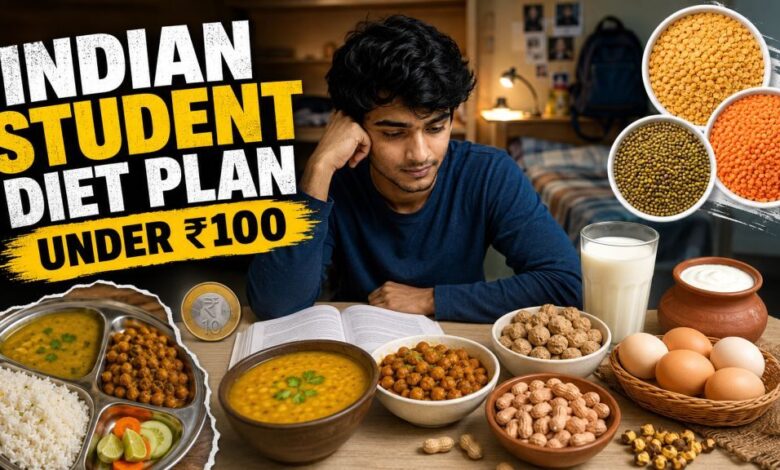
Protein? Maybe 15–30 g if the stars align. Most young adults need roughly 0.8–1 g protein per kilo of body weight per day, so if you’re 60 kg, that’s 50–60 g just to function decently. Cheap Indian sources like dal, chana, soya chunks, eggs, and milk are literally highlighted in hospital and clinic guides as the best budget protein options dal can clock as low as ₹0.4–0.7 per gram of protein, soya is even cheaper, and eggs land around ₹0.9–1.2 per gram at current prices.
But your actual diet is: 200–300 g of carbs, random fat, and accidental protein. Then you wonder why you can’t focus for more than 20 minutes or why you’re always hungry again an hour later.
Ayurveda has been muttering the same thing for a few thousand years: eat food that’s easy to digest, not too heavy, with all six tastes, in the right quantity, at something resembling fixed times. Instead we eat at 1 pm, 5 pm, 11 pm, and 2 am, and call it “hostel life.” Of course your agni is on strike.
A healthy student diet under ₹100 is not about cooking Instagram recipes. It’s about stacking stupidly cheap basics dal, eggs, milk, chana, bananas in a way that doesn’t fry your brain or your wallet.
Once you accept that, this whole thing gets much simpler. Not easy. But simpler.
HOW THIS ACTUALLY WORKS THE REAL MECHANICS
Let’s get specific: what are you trying to achieve with ₹100/day and no full kitchen? Three things:
- Enough protein to not feel like a floating head.
- Steady energy so you don’t crash in every afternoon lecture.
- Digestion that doesn’t keep you in the bathroom during exams.
Cheap protein reality in India
Recent budget‑nutrition breakdowns and hospital diet guides for vegetarians all repeat the same top tier for low‑cost protein:
- Dal and other lentils
- Chana and other legumes
- Soya chunks
- Eggs
- Milk and curd
- Peanuts and roasted chana
Cost/protein wise, ballpark from recent India‑focused breakdowns:
- Dal: ~₹0.4–0.7 per gram of protein.
- Soya chunks: ~52 g protein per 100 g for ~₹20 insane value.
- Eggs: ~6 g per egg at ₹6–8 → ~₹0.9–1.2 per gram.
- Milk: ~16 g protein per 500 ml at ~₹30.
- Roasted chana/peanuts: cheap, portable, and standard on every “hostel snack” list for a reason.
Translation: you can hit 50–60 g protein under ₹100 if you stop wasting money on low‑value junk and build around these.
Ayurvedic angle without going full ashram
Ayurvedic nutrition for normal humans is basically:
- Eat when you’re actually hungry, not all night out of boredom.
- Prefer warm, cooked, simple food over cold, heavy, or very spicy junk if you want digestion and brain power.
- Mix grains + legumes so you get good protein and balanced rasa (tastes).
The hostel‑compatible version:
- Use mess food as your warm, cooked base (rice/roti + dal + sabzi).
- Use your own ₹30–₹60/day “top‑up” to fix what the mess lacks usually protein, fruit, and decent snacks.
Short list with actual opinions:
- Dal: non‑negotiable. If the mess dal is watery, drink more of it anyway; if it’s edible, make it ½ your plate.
- Eggs or milk: if non‑veg is allowed, 1–2 eggs/day is the laziest protein upgrade you’ll ever make; if not, milk/curd does some of that job.
- Soya chunks: ugly but powerful; 20–30 g dry cooked into mess maggi or rice on occasional days is top‑tier budget protein.
- Bananas: clinically proven to be cheap and everywhere; they count as fruit, carbs, and sanity.
COMPARISON WHAT’S ACTUALLY DIFFERENT BETWEEN YOUR OPTIONS
Main Budget Strategies Under ₹100/Day
| Option | What it actually does | Who it’s for | The catch |
| “Mess + Smart Top‑Up” | Use mess for base calories; add cheap protein (eggs/dal/soya), fruit, and snacks. | Most hostel students with basic mess access. | Needs small daily discipline; boring but works. |
| “Maggi & Cafeteria Life” | Convenience, taste, social time; high refined carbs, low protein, unstable energy FOOD. | People prioritising taste and hangouts over health. | You pay later: fatigue, weight swings, acne, poor focus. |
| “Gym Bro Whey + Nothing Else” | Some protein from whey, but rest of diet still junk or starving. | Students who work out but don’t want to cook or plan. | Expensive; misses micronutrients and Ayurvedic digestion basics. |
Verdict: build your life on “Mess + Smart Top‑Up.” It’s the only one that respects both your budget and your brain. If you want whey, cool but only after dal, eggs/soya, and actual food are in place.
WHAT ACTUALLY HAPPENS WHEN YOU TRY THIS
When you actually run a ₹100/day hostel plan properly for a few weeks, a few things change that have nothing to do with abs.
You stop doing full‑day food roulette. Breakfast becomes something predictable: maybe 2 bananas + a glass of milk, or hostel poha/idli + a boiled egg when you can swing it. Lunch becomes “mess thali with extra dal and rice/roti, plus raw onion/cucumber or one cheap fruit if you have it.” Evening is no longer only chips; sometimes it’s roasted chana, peanuts, or a peanut‑butter slice if you’ve smuggled a jar in. Dinner is again mess food, but you actually show up before everything is dead.
Within 10–14 days on this kind of pattern, most students notice:
- Less post‑lunch coma. Protein and decent carbs mean your blood sugar doesn’t go rollercoaster mode.
- Late‑night hunger is less insane. When your main meals have dal + some protein + some fat, the 11 pm Maggi urge drops from “life or death” to “nice but optional.”
- Random acidity, gas, and bathroom drama calm down a bit because you’re not living on only fried, spicy, or dry foods.
What surprised me most watching students do this is how much ₹30–₹60 of intentional spending can change everything. You’re not adding more total money, you’re just shifting it:
- One less daily packet of chips and random sugary drink = ~₹30 back.
- Use that on 2 eggs (₹12–16) + banana (₹5–10) + a handful of roasted chana.
Suddenly your diet isn’t heroic, but it’s not a disaster either.
The pattern no one writes in “student diet” listicles: hostel food is rarely the main villain. It’s the gaps you don’t top‑up properly missing protein, missing fruit, and the 1000 tiny rupees that quietly leak into garbage snacks. When you plug those leaks with dal, eggs/soya, chana, and fruit, your brain starts behaving like it actually wants you to pass.
THE ADVICE EVERYONE GIVES VS WHAT ACTUALLY WORKS
1. “Just eat from the mess, it’s fine”
This is parent logic. Mess food is better than random street food every day, yes. But most mess menus are carb‑heavy, low‑protein, and inconsistent on vegetables and oil quality. You end up full but under‑nourished classic “skinny but tired” or “bloated but still hungry” pattern.
What works:
- Use the mess as your base, but consciously double down on dal, choose sabzis with visible legumes or paneer when available, and always take rice + roti instead of only plain rice.
- Then use your tiny personal budget for high‑impact extras: eggs, soya, milk, chana, peanuts, bananas.
2. “Hostel means Maggi, enjoy these years bro”
Maggi 2–3 times a week as a comfort food? Fine. Maggi almost daily because cooking is “too much effort” from a kettle? That’s malnutrition with a nostalgia filter. Instant noodles give you some carbs, little protein, and almost no real micronutrients. Long term, that’s skin issues, hair fall, bad focus, and a gut that hates you.
Grounded alternative:
- If you must use Maggi, hack it: throw in soya chunks, an egg (if allowed), and some frozen peas, and don’t make it your main meal more than once or twice a week.
- Or switch half those Maggi nights to “dorm dal‑chawal” (cheap electric cooker or shared hotplate) once you have even semi‑cooperative roommates.
3. “I’ll just take whey, that fixes protein”
Whey is fine. Cheap per gram of protein in absolute terms, but in Indian hostel reality, pulses, eggs, and soya are still cheaper. Also: whey doesn’t carry fibre, vitamins, or the real food structure your gut likes. A scoop in water next to a junky diet just gives you expensive pee.
Better strategy:
- Hit at least 40–50 g protein from food (dal, chana, soya, eggs, milk) before thinking about whey.
- If you still can’t reach your target and you lift seriously, then consider a cheap whey after you’ve fixed meals.
4. “Ayurvedic diet is not possible in a hostel”
If by “Ayurvedic” you mean 12 freshly cooked organic items and a personal vaidya, sure. But basic Ayurvedic principles regular meal timing, warm and simple food, not mixing too many incompatible foods, and not overeating junk are absolutely possible at hostel scale.
Realistic version:
- Don’t skip breakfast every day, don’t eat heavy at 1 am every day, and try to keep 2 of your 3 meals warm and cooked.
- Use spices (jeera, ajwain, hing) and ghee when you can to help digestion, and don’t drown everything in cold drinks.
THE PRACTICAL PART WHAT TO ACTUALLY DO
1. Set your daily food budget on paper first
If you truly have ₹100/day total for food beyond what your parents already pay for mess, split it:
- ₹0–₹70: mess food (if included in hostel fees, great then this is your “outside” budget).
- ₹30–₹60: personal top‑ups (protein + fruit + snacks).
From that ₹30–₹60, pre‑decide something like:
- ₹15–₹20 for protein (eggs/soya/milk/curd),
- ₹10–₹15 for fruit (banana/seasonal),
- ₹10–₹15 for roasted chana/peanuts/occasional better snack.
If you don’t do this math, Zomato will do it for you.
2. Build a base “hostel thali” and repeat it shamelessly
Your default mess meal template:
- ½ plate: dal + sabzi (or ¾ dal if sabzi is tragic).
- ¼ plate: rice.
- ¼ plate: roti or extra rice, plus raw onion/cucumber if available.
Whenever there’s chole, rajma, chana, or paneer, that’s a higher‑protein day load up slightly more. When the menu is weak, you compensate with your own eggs/soya/chana later.
3. Lock one cheap breakfast you can always manage
Options that actually fit ₹ and hostel life:
- 2 bananas + 1 glass milk.
- Hostel poha/upma/idli + 1 boiled egg from outside.
- 2 slices bread + peanut butter + banana if you have a toaster plate/kettle hack.
Don’t over‑optimize this. Your goal is “not starting the day on only chai and air.”
4. Bulk‑buy 3 things every week: chana, peanuts, soya
Once a week, buy:
- 500 g roasted chana
- 500 g peanuts
- 250–500 g soya chunks
Together, this is cheap and easily gives you 20–30 g extra protein per day if you actually eat them. Keep them in a box in your room; that’s your 4 pm and 11 pm default, not chips.
5. Decide “junk days” in advance
Hostel is not jail. You will order pizza, have chaat, drink cold coffee. Just don’t pretend every day is a “special occasion.” Pick 2–3 junk slots in a week in advance and let the rest of your meals be boringly sensible.
That way, your body recovers between crimes, instead of living in permanent chaos.
QUESTIONS PEOPLE ACTUALLY ASK
How can I eat healthy in a hostel under ₹100 per day?
Use the mess as your main source of cooked food and spend your limited cash on high‑impact extras: 1–2 eggs or a glass of milk/curd, a banana or other seasonal fruit, and roasted chana/peanuts. Dal should be the star of your plate at lunch and dinner, with rice/roti and some sabzi. This gives you adequate calories, far better protein, and basic micronutrients without crossing ₹100 if you’re disciplined.
What are the cheapest high‑protein foods for Indian students?
Dal, chana, and other pulses are consistently ranked as the cheapest protein sources in India, often around ₹0.4–0.7 per gram of protein. Soya chunks are incredibly dense, with about 52 g protein per 100 g for roughly ₹20, making them top‑tier for budget. Eggs, milk, and roasted chana/peanuts are also affordable and widely available near campuses.
I don’t have a kitchen. What can I actually make?
With just a kettle or induction and some plastic/steel containers, you can do: boiled eggs, soya chunks, simple oats, ready rice, instant poha, and basic dal‑like preparations if you’re a bit adventurous. Most of your “making” will be assembling: bread + peanut butter + banana, mixing soya into Maggi or rice, or keeping chana/peanuts and fruit handy. You don’t need full recipes; you need 3–4 reliable hacks you can repeat.
How do I follow Ayurveda in a hostel?
Focus on principles, not perfection: eat at somewhat regular times, prefer warm cooked food from the mess over cold or deep‑fried junk every day, and don’t eat your heaviest meal at midnight. Choose dal‑sabzi‑rice/roti combos most of the time and save very heavy, oily, or super‑spicy meals for 1–2 days a week. Basic things like sitting to eat, not scrolling every bite, and giving yourself some time to digest also matter more than any “superfood.”
Is it worth buying whey protein on a student budget?
It depends on your priorities. Whey is cheap per gram of protein compared to some animal sources, but in India, dals, soya, eggs, and milk are still generally cheaper and give more overall nutrition. If you’re not already getting 40–50 g of protein from food, whey should not be your first spend fix dal, eggs/soya, and milk/curd first. If you lift seriously and have any budget left, a basic whey can then be a useful add‑on.
How do I stop late‑night junk cravings in hostel?
Most late‑night cravings are your body yelling “you didn’t feed me properly earlier.” Make sure lunch and dinner always have dal + some extra protein source + real carbs, and keep roasted chana, peanuts, and bananas in your room. If you still want something at 11 pm, start with those instead of chips or Maggi; you’ll be surprised how often that solves the “I need to eat” feeling. Also, don’t slam coffee at 7–8 pm it will mess with both sleep and hunger cues.
Can I be vegetarian and still get enough protein in hostel?
Yes, if you plan a little. Focus on dal (2–3 servings per day), chole/rajma when available, soya chunks a few times a week, milk/curd, paneer when mess serves it, and snacks like roasted chana, peanuts, and sprouts when possible. Several Indian hospital and clinic diet guides for vegetarians list these as primary protein sources and show they’re enough for most people when eaten in decent quantities.
How can I keep my digestion okay with hostel food?
Stick to warm, simple meals as your base, don’t overdo very oily or spicy stuff every day, and eat slowly when you can. Use water, not only cold drinks, and keep a simple “digestion kit” jeera, ajwain, saunf mixtures or store‑bought roasted mixes for after heavy meals. If a particular mess dish always destroys your stomach, believe your body and avoid it on important days.
SO WHERE DOES THIS LEAVE YOU
You’re not going to eat “perfectly” in a hostel. You don’t have the money, the gear, or the patience and honestly, you have bigger things to stress about. But you also don’t have to live on tea, Maggi, and complaints. There’s a middle lane.
That lane looks like this: mess food as your boring base, plus a ₹30–₹60 daily plan that goes to dal, eggs/soya, milk/curd, bananas, roasted chana and peanuts instead of random crap. It’s not aesthetic. It is the difference between constant fog and “okay, I can actually sit and study for 45 minutes without disintegrating.”
If you do one concrete thing after reading this: sit down tonight and design one default day under ₹100 (including or excluding mess, depending on your setup). Write it. Bananas here, eggs there, chana here. Run that boring plan for 10 days. Then notice if your brain and body feel even 20% less chaotic. If yes, lock it in. You can always add fancy once you’re not running on fumes.
You got to the end of a diet article that talked more about dal and hostel budgets than abs and aesthetics, which probably means you’re more serious about your health than most people around you. I’m not going to lie and say this is easy you’re fighting money, mess menus, peer pressure, and your own cravings.
But at least now you know this: under ₹100 a day, you’re not choosing between “junk and fun” or “salad and sadness.” You’re choosing between caring just enough to line up cheap protein and real meals… or pretending you’ll fix it “after exams.”
Your call. Your body. Your semester.
YOU CAN ALSO TRY ayurvedic seasonal eating