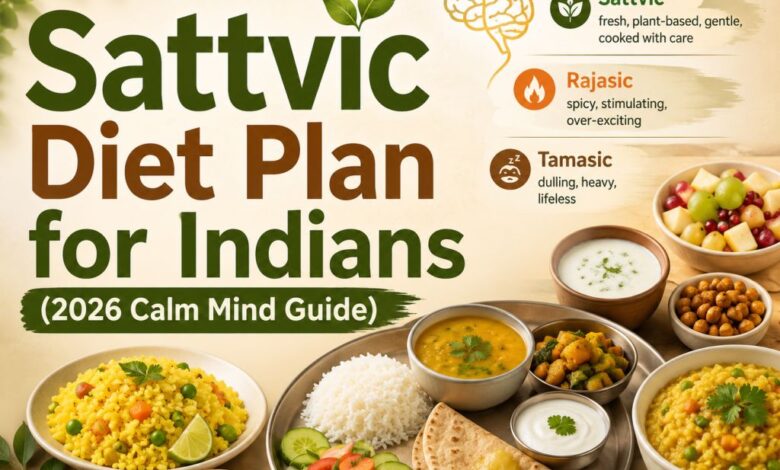
Sattvic Diet Plan for Indians: Eat Like You Want Your Brain to Work Tomorrow
Here’s the honest pattern: you want a calm, focused mind, but your current diet is cold coffee, doomscrolling, and Swiggy. Then you see “sattvic diet” on a yoga reel and suddenly you’re googling whether Maggi is tamasic while eating it.
This site is about Ayurvedic‑style health for actual humans, not ashram residents. You’re between 18 and 35, you have work, maybe exams, maybe a social life, definitely anxiety. You’d love more focus and less mental noise without becoming that person who carries khichdi in a tiffin to every social event.
So this is not a preachy, impossible list. It’s a practical sattvic diet plan for Indians: real foods, real trade‑offs, exactly what a calm‑mind plate looks like, and how to do this in a city without quitting coffee cold turkey on a Monday meeting day.
THE THING NOBODY ACTUALLY SAYS OUT LOUD
Nobody says this because it kills the vibe: most people don’t want a sattvic diet. They want sattvic results calmness, clarity, less overthinking while still eating like a mildly stressed raccoon.
Sattvic in Ayurveda basically means “that which is pure, light, steady, and supports clarity.” Food is grouped into:
- Sattvic: fresh, plant‑based, gentle, cooked with care fruits, vegetables, whole grains, pulses, nuts, seeds, mild spices, some dairy.
- Rajasic: spicy, stimulating, over‑exciting very hot, oily, salty, strong stimulants like caffeine.
- Tamasic: dulling, heavy, lifeless stale food, highly processed stuff, deep‑fried junk, alcohol, meat in this framework.
A sattvic diet is built on fresh fruits and vegetables, whole grains, legumes, nuts, seeds, natural sweeteners, some dairy, and herbal teas prepared simply and eaten fairly soon after cooking. It excludes meat, eggs, alcohol, highly processed foods, and often onions, garlic, and stimulants like coffee.
Here’s the line nobody prints on the pretty sattvic Pinterest boards: what you call “personality” is often just blood sugar spikes, poor sleep, and three cups of coffee sitting on a nervous system that never catches a break.
Modern nutrition quietly agrees with half of this: diets rich in fresh plant foods and low in ultra‑processed, fried, sugary items help mood and cognition. Studies on plant‑forward, minimally processed eating patterns link them to better emotional stability and reduced anxiety. Ayurveda just wrapped that in the language of gunas and prana instead of neurotransmitters.
The real observation from life:
- When your day is caffeine + sugar + spice + screens, your mind is not “overactive,” it’s overstimulated.
- When your day is warm, simple, plant‑heavy meals eaten at somewhat proper times, your mind does this weird thing. It… slows down. You can finish a thought without six side quests.
The boring truth is a sattvic diet is less about purity and more about not constantly throwing petrol on your brain and then looking confused when it catches fire.
HOW THIS ACTUALLY WORKS THE REAL MECHANICS
Strip away the Sanskrit and you’re left with a simple loop: what you eat affects your nervous system, hormones, gut, and sleep which all feed into mood, focus, and how reactive you are.
Sattvic diet patterns usually look like this:
- Mostly plant‑based, high in fruits, vegetables, whole grains, legumes, nuts, and seeds.
- Minimal processed foods, sugar, deep‑fried items, and chemical additives.
- Limited or no caffeine, alcohol, and meat.
- Food cooked lightly, eaten fresh, and not reheated endlessly.
Modern lens on why this helps your mind:
- Stable blood sugar from whole grains and legumes = fewer afternoon crashes and ragey hunger.
- High micronutrients and antioxidants from fruits and vegetables = better brain and nerve support.
- Less ultra‑processed junk = less inflammation, which is strongly linked with mood issues.
- Better gut health from fiber and fermented dairy like curd (for those who tolerate it) = better serotonin and mood stability.
Ayurvedic lens adds:
- Sattvic foods increase clarity, calmness, and stability of mind.
- Rajasic foods push you toward restlessness, aggression, and over‑drive.
- Tamasic foods drag you toward laziness, dullness, and brain fog.
The niche angle generic listicles skip: sattvic isn’t only about what you eat. It’s also:
- How fresh the food is (ideally eaten within 3-4 hours of cooking).
- How you eat no doomscrolling while shoving food, chewing properly, eating in a calmer state.
- How much you overstimulate yourself alongside (caffeine, constant loud music, late‑night screens).
Short list with real opinions:
- Fresh fruits & veg (especially seasonal, ripe): these are the backbone high in prana in the ayurvedic sense, high in nutrients in the scientific sense.
- Whole grains (rice, wheat, millets, oats, barley): give slow energy instead of peaks and crashes; in sattvic patterns they’re lightly spiced and not drowning in oil.
- Legumes (dal, chana, rajma, mung, etc.): your main protein source, but cooked till soft with gentle masala, not restaurant‑style spice bombs.
- Nuts, seeds, and dairy: add satiety and brain‑supporting fats, but in sattvic style you’re using modest portions, not full‑on cheese rivers.
- Herbal teas vs coffee: herbal or caffeine‑free teas are favored because stimulants are considered rajasic too much push, then crash.
COMPARISON WHAT’S ACTUALLY DIFFERENT BETWEEN YOUR OPTIONS
Sattvic vs Rajasic vs Tamasic Eating (Modern Indian Life Edition)
| Option | What it actually does | Who it’s for | The catch |
| Sattvic diet | Calmer mood, more stable focus, lighter body, fewer energy crashes. | People craving mental clarity, spiritual practice, or less anxiety. | Needs planning; you say no to a decent chunk of “normal” foods. |
| Rajasic diet | High stimulation: spicy, salty, caffeinated, exciting in the moment. | Hustle culture, night‑owls, high‑stress jobs, social butterflies. | Great short‑term; long‑term can mean restlessness, burnout, irritability. |
| Tamasic diet | Heavy, dulling, numbing; lots of fried, stale, and processed foods. | People living on junk, late nights, and leftovers. | Feels comforting but leads to brain fog, low mood, lethargy. |
If your goal is a calm, focused mind, sattvic should be your base, with small, deliberate touches of rajasic when needed (like a meeting day coffee), and tamasic as the rare guest, not the landlord. My take: you don’t need “100% sattvic,” you need “majority sattvic, strategic rajasic, minimal tamasic.”
WHAT ACTUALLY HAPPENS WHEN YOU TRY THIS
When you actually eat sattvic for a few weeks, the first shift is not enlightenment. It’s boredom. Your taste buds, trained on masala and sugar, quietly sulk.
Then something annoying happens: your nervous system stops screaming all the time.
A basic sattvic Indian day might look like:
- Breakfast: poha or upma with vegetables, or fruits with a handful of soaked nuts.
- Lunch: simple dal, rice or phulka, one sabzi, salad, a little ghee, maybe curd.
- Snack: fruit, buttermilk, or roasted chana instead of chips and sugary coffee.
- Dinner: lighter than lunch khichdi, veg pulao with raita, or sabzi + phulka.
Within 5-10 days, most people notice:
- Afternoon brain fog is less brutal.
- Sleep starts feeling a bit deeper when paired with less late‑night stimulation.
- Mood swings over tiny things reduce just enough that people stop asking “what happened?” every two hours.
What surprised me is not how sattvic food makes you feel in a vacuum, but how it changes your baseline. When your meals are lighter, fresher, and less hyper‑stimulating, you become more aware of what coffee, sugar bombs, and junk actually do to your mind. One random fast‑food meal suddenly feels like wearing a wet blanket on your brain.
The pattern almost no listicle mentions: your cravings shift funny. At first you crave spice and junk. Then, after some time on sattvic food, you crave… quiet. Not always salad but warm, simple dal‑rice, fruit, lighter food on days your mind is overloaded. It’s like your body starts asking for low‑noise meals when your life is loud.
There’s also the social friction. Eating more sattvic as a young Indian usually means:
- Saying no to late‑night very heavy food more often.
- Drinking less or not at all at social events.
- Being “the weird one” who wants dal‑rice instead of just pizza for the third night.
When you actually try this honestly for a month, what you get is not just food changes. Your whole day gets edges shaved off. Fewer highs and crashes. Fewer “why did I snap?” moments. More “I’m tired, but I’m not unraveling.” That’s what a calmer, more focused mind feels like in normal, messy life.
THE ADVICE EVERYONE GIVES VS WHAT ACTUALLY WORKS
1. “Go fully sattvic overnight: no onion, no garlic, no coffee, no fun”
This is usually said by people who live in ashrams, or have never actually tried doing this with a 9-5 and a family. Strict sattvic lists often ban onion, garlic, eggs, meat, alcohol, caffeine, packaged foods, and more. If you flip that switch in one day, you will hate everything and quietly quit by day four.
Better version:
- First 4 weeks: keep onion/garlic if you want, but dump obvious junk deep‑fried snacks, sugary drinks, heavy night meals, daily desserts.
- Only once your base is cleaner, then experiment with reducing onion/garlic and coffee if your goal is serious mental stillness (meditation, etc.).
2. “Sattvic means bland khichdi and sadness”
A lot of “sattvic recipes” online are just yellow rice and boiled vegetables with trauma flashbacks. In actual Indian kitchens, sattvic still uses spices cumin, coriander, turmeric, ginger, fresh herbs, mild chillies. It’s not flavourless; it just doesn’t punch you in the face.
Grounded take:
- Think temple food, good South Indian home food, or a clean home‑style thali not hospital food.
- You can absolutely have taste: lemon, hing, roasted jeera, coconut, fresh coriander, curry leaves, mild spice all fit in sattvic patterns.
3. “If it’s vegetarian, it’s sattvic”
No. A paneer butter masala, triple cheese pizza, or sugar‑loaded milkshake is vegetarian and very not sattvic. Sattvic is about freshness, lightness, minimal processing, and how the food affects your mind and body. Ultra‑processed biscuits and deep‑fried pakoras are still rajasic/tamasic by this framework even if they’re technically veg.
Reality:
- You can be vegetarian and still have a chaotic mind if your diet is mostly sugar, maida, oil, and caffeine.
- Sattvic is a sub‑set of veg, not a synonym.
4. “Sattvic diet alone will cure your anxiety and ADHD”
A nice fantasy, but reductionist. The sattvic pattern can support better sleep, calmer mood, and improved cognitive stability. There’s some emerging work on plant‑based, minimally processed diets helping mental health. But real anxiety, depression, ADHD, etc., are multi‑factor brain chemistry, sleep, trauma, environment, genetics.
More honest framing:
- Sattvic eating removes a lot of dietary things that make your brain worse: sugar spikes, junk, heavy late meals, overstimulation.
- It’s a powerful support to therapy, medication (where needed), and lifestyle changes. Not a magical replacement.
THE PRACTICAL PART WHAT TO ACTUALLY DO
1. Decide your sattvic “level” upfront
Be real about your life:
- Level 1: 60-70% sattvic mostly home veg food, less junk, modest coffee, some onion/garlic.
- Level 2: 80-90% sattvic regular simple home food, minimal processed items, coffee rare, onion/garlic reduced.
- Level 3: Near‑ashram no onion/garlic, no stimulants, no packaged foods, strict timing.
If you’re working/studying in a city, Level 1 or 2 is already a big win. Don’t aim for 3 on week one unless you like suffering.
2. Build one sattvic plate you repeat
Pick a default Indian sattvic lunch/dinner plate:
- Grain: rice or phulka (whole wheat/millet), not fried.
- Dal: moong, masoor, or arhar with light tadka (jeera, hing, haldi, maybe little chilli).
- Sabzi: seasonal veg lightly spiced and not swimming in oil.
- Add‑ons: small salad, a spoon of ghee, maybe curd if it suits you.
Eat this 5-8 meals a week. Boring wins here.
3. Change breakfast and late‑night first
Most minds get wrecked here.
- Breakfast: replace heavy paratha + chai + sugar with upma/poha/idli + herbal tea or lighter chai, or fruit + soaked nuts + simple toast.
- Night: no giant, spicy, oily dinner at 11 pm. Aim for something like khichdi, light pulao, or sabzi + phulka before 9-9:30 most days.
You’ll feel the mental difference fastest here.
4. Set simple rules for “mind noise” foods
Give yourself three rules:
- Coffee/energy drinks only before 2 pm, max 1-2 cups on regular days.
- No sugary drinks as daily habit soft drinks, packaged juices, syrupy cold coffees are for very occasional use.
- Fried and hyper‑spicy food max 1-2 times a week, not your daily default.
This alone pushes you strongly toward sattvic territory.
5. Eat like you’re actually there
Last, deeply un‑sexy step: how you eat.
- Sit down. Phone away for at least part of the meal.
- Take 10-15 minutes to eat, chew, and actually taste.
- Don’t eat while in a full argument or scrolling rage comments.
A lot of “sattvic effect” is just: nervous system not in fight‑or‑flight while digesting.
QUESTIONS PEOPLE ACTUALLY ASK
Is a sattvic diet realistic for Indian students and working professionals?
Yes, if you think “more sattvic” instead of “perfect sattvic.” Base your meals on regular Indian home food dal, rice, sabzi, phulka, poha, upma, idli, fruits, nuts and cut down on daily junk, sugar, and very late heavy dinners. Keep coffee but limit timing and amount. Full ashram‑style strictness is hard with 9-5 and social life, but 60-80% sattvic is absolutely doable.
Which Indian foods are considered sattvic?
Typical sattvic foods include fresh fruits, seasonal vegetables, whole grains (rice, wheat, millets, oats), legumes (dal, chana, rajma, mung), nuts, seeds, and simple dairy like milk, curd, ghee, and paneer in moderation. They’re cooked with mild spices like turmeric, cumin, coriander, and ginger and eaten fresh, not days later.
What foods are not allowed in a sattvic diet?
Common lists exclude meat, fish, eggs, alcohol, very spicy or fried foods, processed and packaged items, refined sugar and white flour, and stale or reheated food. Many sattvic traditions also avoid onion, garlic, coffee, and black tea because they’re seen as too stimulating or heavy for the mind. How strict you go depends on your goal and context.
Does a sattvic diet really help with anxiety and focus?
Evidence around sattvic diets specifically is emerging, but research on similar plant‑forward, minimally processed diets shows better mood stability and cognitive performance. Ayurveda holds that sattvic foods increase calm, clarity, and balanced emotions. So while it’s not a cure for clinical conditions, many people experience fewer crashes, better sleep, and less reactivity when they shift toward sattvic eating.
Can I drink coffee or chai on a sattvic diet?
Strict sattvic guidelines say no to caffeinated drinks because they’re rajasic stimulating and potentially agitating. In real life, many people following a “sattvic‑leaning” diet still have chai or coffee in small amounts, earlier in the day, and focus on cleaning up food quality first. A good compromise is: 1 cup in the morning, none late evening, and more herbal teas or warm water the rest of the time.
Is onion and garlic banned in sattvic diet?
Traditional sattvic definitions usually exclude onion and garlic, classifying them as rajasic or tamasic because they are thought to stimulate or dull the mind. Nutritionally, they’re not “bad,” but if your goal is meditative stillness or very subtle mental work, some lineages recommend avoiding them. Many modern people do a halfway version: once their base diet is clean, they experiment with reducing onion/garlic and see if they feel a difference in mental clarity.
Will I get enough protein on a sattvic diet without eggs and meat?
You can, if you plan it properly. Sattvic eating still allows plenty of plant proteins: lentils, beans, chickpeas, mung, sprouts, nuts, seeds, and dairy like milk, curd, and paneer. A typical Indian plate with dal, curd or paneer, some nuts, and grains provides decent protein, especially if you’re not a bodybuilder. You just can’t rely on only rice and sabzi and expect magic.
How do I start a sattvic diet without shocking my system?
Start by changing what’s easiest:
- Make breakfast and dinner lighter and less oily.
- Add fruits and nuts daily.
- Cut down obvious junk, sugar drinks, and late night heavy meals.
Only once that feels normal, decide if you want to reduce coffee, onion, garlic, or processed snacks further. Gradual change is much more sustainable than one week of extreme purity followed by burnout.
SO WHERE DOES THIS LEAVE YOU
You’re probably not moving into an ashram next week. You’re still going to have deadlines, notifications, maybe the occasional binge session with friends. Calm and focus are fighting for space with real chaos.
A sattvic diet is not going to erase your life. What it can do is stop your food from adding unnecessary chaos on top of what’s already there. Fresh, simple, plant‑heavy, lightly spiced meals that don’t hijack your nervous system that’s the whole play.
If you do one concrete thing after reading this, make it this: design one sattvic plate you can eat most days dal, rice/phulka, sabzi, salad, maybe curd and swap it in for your usual heavy lunch or dinner at least 4-5 times a week. Don’t worry about being pure. Just notice what happens to your mind when your food stops screaming as loudly as everything else.
You made it through an article about rice, dal, and emotional stability, which is already more self‑respect than scrolling through another “5 hacks to focus” reel. I won’t sell you a fantasy where one sattvic meal turns you into some serene monk.
What it can do is give your nervous system a fighting chance. Less noise from your plate, more bandwidth for your brain. Over weeks, you start to feel the gap between “I’m exhausted and wired” and “I’m tired but clear enough to choose what happens next.”
If food is something you do three times a day anyway, it might as well be the one area that quietly pushes you toward a calmer, sharper version of yourself instead of dragging you away from it.






2 Comments