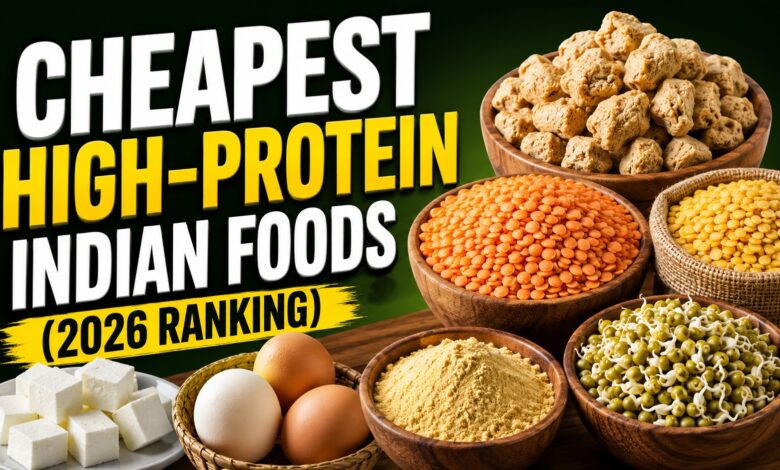
Cheapest High-Protein Indian Foods: Dal, Eggs, Paneer & More, Ranked by Actual Rupees
If you’ve ever said “protein is too expensive in India” while chewing a ₹180 frappuccino, this article is gently aimed at you.
On this site we talk about Ayurvedic‑ish health for real people: you want muscle, better mood, decent hair, but your budget is more “dukaan soya” than “imported whey.” The funny part? India‑specific breakdowns now rank soya chunks, dals, sprouts, sattu, eggs, and peanuts as stupidly cheap protein per gram, with soya chunks down at roughly ₹0.2–0.3 per 1 g protein, dals and chana around ₹0.35–0.45, and eggs closer to ₹1–1.5. Ayurveda, for once, agrees with the finance math: lentils, mung, chickpeas, nuts and dairy are seen as nourishing, Ojas‑building protein when your digestion can actually handle them.
So let’s stop arguing in the comments and actually rank the cheapest high‑protein Indian foods by cost per gram, how they sit in your body, and when they’re a good idea… or not.
THE THING NOBODY ACTUALLY SAYS OUT LOUD
Nobody says this on reels because it kills supplement sales: if you live in India, your protein problem is not money, it’s boredom and planning.
The numbers are brutal and kind of hilarious:
- Soya chunks: about 52 g protein per 100 g dry, with some sources quoting ₹60–140/kg, which works out to something like ₹0.2–0.3 per gram of protein often the absolute cheapest.
- Masoor and chana dal: commonly estimated around ₹0.35–0.45 per gram of protein in recent cost‑per‑gram tables.
- Sprouted moong and sattu: one breakdown shows a serving of sprouted moong (~4 g protein) for about ₹2 and a glass of sattu drink (~12 g protein) for under ₹8, putting them into the low‑cost club too.
- Eggs: around 6 g protein per egg at ₹6–10 in many areas, so roughly ₹1–1.5 per gram.
- Paneer: about 18–20 g protein per 100 g, with typical costs putting it clearly more expensive per gram than soya or dal, but still not obscene in small portions.
Meanwhile, most people’s actual plates are:
- Pile of rice.
- One watery dal with 8 g of protein if you’re lucky.
- Oil, sugar and vibes.
Ayurveda quietly sides with the old aunties here. Good Ayurvedic protein writeups talk about lentils, mung beans, chickpeas and nuts as grounding, strength‑giving, and dosha‑balancing, with much more worry reserved for overdoing red meat and hard‑to‑digest stuff. The catch they insist on? Soak pulses, cook them properly, add spices like hing, cumin, ginger, ajwain, and actually build your agni (digestive fire) instead of nuking it with 3 coffees first.
But generic “high‑protein Indian foods” lists keep pretending every source is equal for every person and every wallet. They’ll say:
- “Paneer is great protein” (true, but not the cheapest).
- “Greek yogurt has more protein” (also true, also more expensive).
- “Soybeans are gems” (yes, for around 28 g protein per cooked cup).
They rarely say: if you’re broke, student, or just don’t want to throw half your salary at protein, your core team is soya chunks, dals/chana, sattu, sprouts, eggs, peanuts/roasted chana, and then paneer/curd as taste upgrades.
The real game isn’t “what has the highest protein number on paper.” It’s “what gives you 20–30 g protein per meal, your gut can handle it, and your bank account doesn’t cry.”
HOW THIS ACTUALLY WORKS THE REAL MECHANICS
Let’s be boring and precise: we’re ranking “cheapest high‑protein foods” by cost per gram of protein, not by how aesthetic they look in a reel.
1. Cost-per-gram: who actually wins?
Recent India‑focused breakdowns and diet guides agree on the core hierarchy:
- Soya chunks / soybeans at the very bottom of the price curve.
- Dals and chickpeas just behind them.
- Eggs and dairy (paneer, milk, curd) higher, but still reasonable.
Quick reality numbers:
- Soya chunks: 52 g protein per 100 g dry; articles and product listings place them at maybe ₹60–140/kg, plus analyses calling it ₹3–4 per 10 g protein and ₹0.2–0.3 per gram.
- Lentils (dal): about 18 g per cooked cup; cheap‑protein rankings show masoor/chana dal around ₹0.35–0.45 per gram.
- Eggs: 6 g per egg, ~₹6–10 → ₹1–1.5 per gram.
- Paneer: ~18–20 g per 100 g; per‑gram cost is higher than soya/dal since 100 g often costs ₹30–40.
- Peanuts/roasted chana, sattu and sprouts: recurring in budget lists as “protein under ₹10 a serving” with 9–16 g per cheap portion.
So in rupees, the actual order is: soya chunks ≈ soybeans → dals/chana → sattu/sprouts/roasted chana/peanuts → eggs → paneer/Greek yogurt.
2. Protein quality and Ayurvedic friendliness
Medanta‑style vegetarian protein guides and mainstream lists put soybeans, lentils, paneer, seitan, Greek yogurt, nuts and seeds in the “strong veg protein” club, with soybeans called “protein king” at about 28 g per cooked cup.
Ayurvedic voices frame it differently:
- Lentils, mung beans, chickpeas, tofu, eggs, and whole grains are recommended as wholesome, sustained‑energy proteins that support Ojas and balanced doshas.
- Pulses can cause gas (especially some beyond mung and red lentils), so they hammer on soaking, thorough cooking, and spices like hing, ajwain, cumin, ginger, fennel to make them digestible.
- Combining pulses with grains, nuts or seeds over a 24–48‑hour window gives complete protein, you don’t need perfection at every meal.
Soya has its own subplot:
- Nutritional articles rave about 52 g protein per 100 g dry, complete amino acid profile, and call it the best vegetarian source when used sanely.
- The same sources suggest sensible daily portions around 15–30 g dry soya chunks, to avoid potential issues with phytoestrogens and thyroid in sensitive people.
3. The corner generic lists always ignore
The ignored angle is not “what has protein?” but “what has protein that a broke, stressed, Indian 25‑year‑old will actually eat 5 days a week?”
Short, opinionated ranking of categories:
- Soya chunks
- Cheapest per gram, highest density, plant‑based, can be spiced into anything.
- Also the easiest to over‑rely on and then blame when your stomach or hormones complain.
- Dals (masoor, moong, chana dal) and whole chana/rajma
- Not the absolute cheapest per gram, but the backbone of Indian protein + fibre + minerals, and more Ayurvedic gold‑star than living on just soya.
- Eggs
- Not the cheapest per gram, but incredibly convenient, high quality, and easy to digest for many.
- Paneer & curd
- More expensive, but high satiety, good calcium, and very “home food” in taste; useful as add‑ons, not budget base.
COMPARISON WHAT’S ACTUALLY DIFFERENT BETWEEN YOUR OPTIONS
Budget Protein Sources: Cost, Use, and The Catch
| Option | What it actually does | Who it’s for | The catch |
| Soya chunks / soybeans | Ultra‑cheap, very high protein density (up to ~52 g/100 g dry); great for 20–30 g boosts. | Vegetarians, students, budget muscle builders. | Needs soaking, good cooking, spices; overuse (beyond ~25–30 g/day dry often) not ideal for some. |
| Dals & chickpeas | 18 g protein/cup cooked lentils; cheap, fibre‑rich, Ayurvedically prized when cooked with spices. | Everyone; safest default budget protein in Indian food. | Gas and heaviness if you jump from 0 to 3 cups a day without soaking/spices. |
| Eggs & paneer | High‑quality complete protein; eggs ~6 g each, paneer ~18–20 g/100 g; very versatile. | Non‑veg / lacto‑veg folks wanting convenience and taste. | Higher rupees per gram; easy to overshoot calories if you only use these. |
My take: soya chunks and pulses win the cost war, but dal/chana should be your daily foundation, and soya the “intensifier,” not the only thing you eat. Eggs/paneer are for when your budget and digestion allow and you want taste plus convenience.
WHAT ACTUALLY HAPPENS WHEN YOU TRY THIS
When you actually start eating “cheapest high‑protein foods” instead of just reading about them, your life does not turn into a macro spreadsheet. It turns into a rotation of a few ugly but effective meals.
You buy a kilogram of soya chunks because some reel said “52 g protein for ₹20 per 100 g” and you feel clever. First week, you throw fistfuls into everything: Maggi, pulao, sabzi, dal. Your stomach files a complaint. A decent soya guide somewhere quietly recommended 25–30 g/day dry as a safe, regular amount… which you obviously didn’t read.
Then you adjust:
- 25–30 g dry soya chunks per day (~13–16 g protein) cooked properly with masala.
- 1–2 cups of dal or chana/rajma split across lunch and dinner (another ~18–30 g).
- A couple of eggs or a modest paneer/curd serving on some days, when budget and digestion allow.
Now your per‑day protein is quietly in the 60–80 g range if your total calories are okay, which multiple Indian vegetarian diet plans say is a very comfortable zone for most non‑athlete adults. You didn’t touch whey, you didn’t sell a kidney, you just stopped letting most of your plate be hollow carbs.
The actual lived experience:
- You stay full longer after meals because pulses, soya and eggs/paneer come with fibre and fat, not just sugar‑like carbs.
- Your random afternoon energy crashes are less dramatic.
- You go to the bathroom more regularly, sometimes with more gas initially, until your gut adjusts. Ayurvedic pulse guides literally say this: start small, soak well, cook thoroughly, use hing/ajwain/cumin/fennel, and your system learns.
The surprise for a lot of people is how quickly “luxury” items get demoted. Paneer stops being this guilt‑trip, and starts being: “I’ll keep it at 50–100 g a few times a week, with dal on the side, because dal gives protein for half the price and makes my stomach happier.” Eggs become “one of the tools,” not a religion, because you realise soya + dal already cover half the ground for cheaper.
The pattern other articles skip: the intersection of cost, protein and Ayurvedic digestion. Pulses and soya are gold on paper but heavy if your agni is weak. The Ayurveda‑centric fix is not “avoid them”; it’s: soak, rinse, cook with spices and oil, avoid bad food combos (like heavy pulses + a lot of dairy in the same meal), and let your system build up tolerance. When you respect that part, cheap protein stops feeling like punishment and starts feeling like normal food.
THE ADVICE EVERYONE GIVES VS WHAT ACTUALLY WORKS
1. “Just eat more paneer, it’s great vegetarian protein”
Paneer is solid around 18–20 g protein per 100 g, plus calcium and great taste. But cost‑per‑gram wise, it’s noticeably pricier than dal or soya, and large portions sneak in a lot of fat and calories. For tight budgets, “paneer as main protein” most days is how you burn money quietly.
Better framing:
- Paneer is your “occasionally generous” protein 50–100 g portions a few times a week, usually paired with dal or chana, not your only protein source.
2. “Soya is cheap but dangerous for hormones, avoid it”
This one refuses to die. Current Indian nutrition explainers call soya chunks “the protein king” for vegetarians, with 52 g protein per 100 g dry and very low fat, and explicitly say it can be used daily at about 25–30 g dry. They do warn that megadoses or heavy use in people with thyroid/hormone issues may be unwise, and they tell you not to treat it like salad it’s still a concentrated processed soy product.
Grounded take:
- If you’re healthy and not pounding 100 g dry soya daily, 15–30 g a day as part of a varied diet is generally treated as fine in mainstream guides.
- If you have thyroid or specific hormone‑sensitive conditions, that’s when you actually talk to a doctor instead of to reels.
3. “Dal has protein but not enough for muscle, you need only eggs/whey”
Vegetarian hospital and clinic guides in India very openly list lentils as “protein powerhouses,” pointing out that 1 cup cooked lentils gives about 18 g protein and that Indian vegetarian diets can hit 60–80 g protein very comfortably with right combinations. One cup of chana, rajma or soybeans per day will push that even higher.
The catch is not that dal is weak; it’s that one tiny katori of thin dal is. If your “dal serving” is 2–3 spoonfuls, of course your protein is low. The solution isn’t to abandon dal, it’s to:
- Increase portion sizes (½–1 cup cooked),
- Combine with other pulses, soya, dairy or eggs through the day.
4. “Ayurveda says too much protein is bad, so just eat ‘balanced’”
What Ayurveda actually says in good modern interpretations: focus on sattvic, easy‑to‑digest proteins like mung, lentils, nuts, seeds, whole grains and moderate dairy or eggs; limit very heavy, tamasic sources, especially at night or in excess. It doesn’t argue with the fact that your body needs protein; it argues with the way you deliver it ice‑cold shakes, giant meat dinners, protein with no spices or oil to help digest.
Realistic version:
- For an Ayurvedic‑leaning, budget‑friendly plate: base protein on pulses + a little soya, then add dairy/eggs as per your constitution and ethics.
THE PRACTICAL PART WHAT TO ACTUALLY DO
1. Pick your protein budget tier
Be blunt with yourself:
- Tier 1 (very tight): mostly dal/chana + soya chunks + peanuts/roasted chana + curd when you can.
- Tier 2 (moderate): all of the above + regular eggs and paneer in modest amounts.
- Tier 3 (comfortable): above + Greek yogurt, seeds, fancy flours, etc.
Don’t plan a Tier 3 life on a Tier 1 wallet.
2. Build one “cheap 30g protein meal” you can repeat
Example vegetarian plate using only budget foods:
- ¾–1 cup cooked masoor or moong dal (~14–18 g),
- 25–30 g dry soya chunks cooked into the dal (~13–16 g),
- Rice/roti + veg on the side.
That’s already 27–34 g protein in one meal. Make that your default lunch or dinner 3–4 times a week.
3. Add 2–3 “default” cheap protein snacks
Steal from the lists that keep popping up:
- Roasted chana or peanuts (~7–9 g per ~30 g handful).
- Sattu drink (roasted chana flour) with water, lemon, masala (~12 g glass under ₹8 in some breakdowns).
- Sprouted moong bowl (~4–9 g per 100 g, depending on portion).
If each snack gives you 7–12 g, that plus one serious meal gets you a long way.
4. Apply Ayurvedic digestion rules to pulses and soya
If you don’t want to live in the gas chamber:
- Soak beans and most dals properly; change water if soaking long.
- Boil thoroughly; undercooked pulses are harder to digest.
- Always add digestion spices hing, ajwain, cumin, coriander, ginger, fennel and some healthy oil or ghee.
- Don’t introduce everything at once; let your system adapt.
Your gut will thank you, and you’ll actually stick to the cheap‑protein life.
5. Decide if you really still “need” whey
Ask yourself:
- Are you consistently below ~0.8–1 g/kg protein after using dal, soya, eggs, paneer, nuts, curd and sattu?
- Do you have the budget for a tub on top of real food?
If yes and you’re serious about training, whey can be a convenient add‑on. If not, your money is almost always better put into more pulses, soya, eggs, paneer and nuts the actual cheapest high‑protein Indian foods you’re reading about right now.
QUESTIONS PEOPLE ACTUALLY ASK
Which is the cheapest high-protein Indian food?
By cost per gram of protein, soya chunks almost always come out on top in Indian analyses, with around 52 g protein per 100 g dry and rough estimates of ₹0.2–0.3 per gram. Dals like masoor and chana, plus chickpeas, follow closely at about ₹0.35–0.45 per gram of protein, making them the cheapest non‑soy options.
Are eggs or dal cheaper for protein in India?
On a strictly rupees‑per‑gram basis, dal usually wins. Eggs give about 6 g protein each and typically cost ₹6–10, so you pay around ₹1–1.5 per gram. Dals such as masoor can land in the ₹0.35–0.45 per gram range when bought in bulk. Eggs are still excellent for convenience and high‑quality protein, but they’re not the absolute cheapest per gram.
Is paneer a good budget protein source?
Paneer has solid protein usually 18–20 g per 100 g and is very filling, which is why many Indian diets rely on it. But compared to soya chunks and pulses, paneer costs more per gram of protein, especially if you buy it readymade. It works best as a moderate add‑on (say, 50–100 g portions a few times a week) alongside cheaper bases like dal and chana.
How much soya chunks is safe to eat daily?
Modern nutrition articles and hospital blogs on soya chunks generally suggest around 15–30 g dry soya chunks per day for regular use, which gives roughly 13–16 g protein once cooked. They highlight that 100 g dry has 52 g protein, but also warn that overdoing soya, especially for people with thyroid or hormone‑sensitive conditions, may not be wise. Balance it with other protein sources instead of making it your only one.
Can I build muscle on a vegetarian Indian diet using only cheap foods?
Yes. Vegetarian hospital and dietitian guides in India show that 60–80 g of protein per day is achievable with lentils, chickpeas, soy products, paneer, curd, nuts, seeds, and items like sattu and sprouts. Combine those foods with progressive strength training, adequate total calories, and basic recovery, and you can absolutely gain muscle without expensive supplements.
Which high-protein foods does Ayurveda actually like?
Ayurveda‑informed sources tend to favour plant‑based proteins like lentils, mung beans, chickpeas, tofu, nuts, and seeds, plus moderate use of eggs and dairy for those who take them. Pulses like mung and red lentils are seen as gentler, while heavier legumes are made more digestible through soaking, proper cooking, and spices like hing, cumin, ajwain, and ginger. Overuse of heavy meats is discouraged, especially at night or with weak digestion.
What’s the best cheap protein snack in India?
Peanuts, roasted chana, sattu drinks, boiled chana, and sprouts come up again and again in Indian protein guides as low‑cost snack options. A 30 g handful of peanuts or roasted chana offers around 7–9 g of protein, while a glass of sattu drink can give around 12 g for under ₹8, according to some breakdowns. These are far cheaper per protein gram than branded bars or shakes.
Do I need whey if I’m eating dal, eggs, paneer and soya?
Not necessarily. If you intentionally build meals with pulses, soya, dairy and/or eggs, many Indian diet plans show you can reach 60–80 g protein per day without whey. Whey is useful when time, appetite, or logistics make it hard to hit your target, or if you’re aiming for the higher end of 1.2–1.6 g/kg for intense training. But in pure cost‑per‑gram terms, basic Indian foods still compete very well.
SO WHERE DOES THIS LEAVE YOU
You’re not going to spreadsheet your way to perfect macros overnight. You’ll still have days of only chai and biscuits, or nights where dinner is whatever your friend ordered. But “protein is too expensive” doesn’t get to be your default excuse anymore not if you live in a country where soya chunks, dal, chana, eggs, paneer, peanuts and sattu exist at 2026 prices.
The honest situation: if you lock in two cheap protein‑heavy meals and one decent snack most days, your body will notice. You’ll feel less like a floating head, have more stable energy, and your training or just your brain will work better. None of that requires imported tubs; it requires repeating “boring” foods while everyone else experiments themselves into malnutrition.
If you do one concrete thing today, pick a single cheap protein base soya chunks + one dal and build one 25–30 g protein meal you can eat three times this week without hating your life. Once that’s real, add eggs or paneer where you can afford it. Let the supplements be the last layer, not the foundation.
You made it through an article that talked more about cost per gram and digestion than bicep peaks, which already puts you ahead of the “no gains because genetics” crowd. I won’t lie: building a higher‑protein diet on a budget is dull, repetitive, and not reel‑friendly most days.
But the trade is simple. You give your body dal, chana, soya, eggs, paneer, sattu, peanuts and some patience and in return, it stops feeling like a tired passenger in its own life. That’s a much better deal than another expensive scoop that never fixed the rest of your plate.
Qns for you
Tell me what are the cheapest high protein indian foods ranked by cost per gram of protein in comment.