Vegetarian Keto With Indian Food: Ambitious, Annoying, Still Possible
Introduction when you want keto but your family wants paneer, not chicken
At some point you watched a video promising “7 kg in a month with keto” and thought, fine, I’ll suffer, give me the chart. Then they said “eat bacon, eggs, chicken, fish” and your brain went: “Cool, except I’m vegetarian, live in India, and my mom will physically throw the diet out of the house.”
So you land here asking, “Vegetarian keto Indian diet: is it possible? And can I do it without living on just paneer and sadness?”
Short answer: yes, it’s possible. Long answer: it’s technically possible, nutritionally tricky, and logistically annoying enough that you should know exactly what you’re signing up for. A vegetarian keto diet keeps carbs really low usually 20–50 g net per day and pushes fat up to around 60–75% of calories with moderate protein. Doing that without meat in an Indian kitchen is… cute. But doable.
This site is for 18–25-year-old diet-plan nerds who like charts but secretly just want someone to tell them what’s realistic. That’s what this is. No keto worship, no keto hate. Just how to actually do vegetarian keto with Indian food without wrecking your health or your social life.
THE THING NOBODY ACTUALLY SAYS OUT LOUD
Keto content online acts like going low-carb is a personality trait. Meat, butter coffee, “we don’t do rice here.” Then you show up as a vegetarian Indian and suddenly it’s a puzzle where half the pieces are missing.
Here’s the bit most polished keto blogs gloss over: keto is designed around animal fat and protein. The standard macros are roughly 55–75% of calories from fat, 20–30% from protein, and 5–10% from carbs often 20–50 g net carbs per day. That’s easy if you’re eating meat and eggs. If you’re vegetarian, your main players become paneer, cheese, ghee, butter, nuts, seeds, oils, and very low-carb vegetables.
You know what nobody says? Living on paneer, cheese, and nuts at 19 years old looks great on Instagram and not great on your digestion or blood lipids if you do it badly.
You also collide with Indian culture in record time. Try explaining “no roti, no rice, no dal, no aloo, minimal fruit” at a family lunch. Half the table will offer you more sabzi; the other half will decide you’re broken.
Most vegetarian keto articles toss in a line like “just avoid grains, legumes, starchy vegetables, and sweet fruits.” That’s basically… the majority of a normal Indian vegetarian plate.
Vegetarian keto isn’t “slightly low-carb.” It’s you deleting half your traditional food and rebuilding your diet from fat, paneer, and green things.
The thing nobody says aloud because it’s bad for engagement: this diet is high-effort. You’ll be tracking carbs, reading labels, thinking about net carbs in lauki, and explaining for the tenth time why you can’t “just have one piece of bread.”
Pop culture reference, because you’re young enough to know: going vegetarian keto in an Indian household is like trying to be a minimalist in a house where your family collects plastic bags and old newspapers “just in case.” You’re not just changing food; you’re challenging history.
If that sounds dramatic… good. It is. And if after hearing all this you still want to try it, that’s a sign you might actually stick with it long enough to see what happens.
HOW THIS ACTUALLY WORKS THE REAL MECHANICS
Mechanically, keto is simple: drop carbs so low that your body starts using ketones (from fat) as its main fuel instead of glucose. You do this by cutting grains, sugar, most fruits, starchy vegetables, and many legumes, then replacing those calories with fats and some protein.
On vegetarian keto, your situation is more tight. You still need carbs under roughly 20–50 g net per day, but you can’t rely on meat for protein or fat. So you overhire these foods:
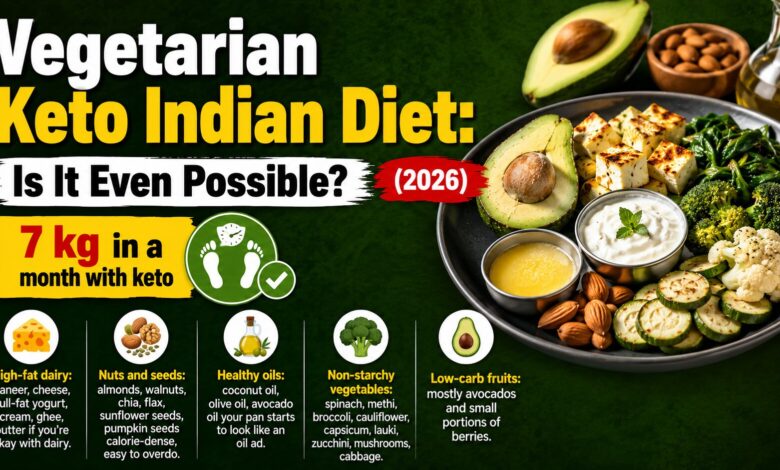
- High-fat dairy: paneer, cheese, full-fat yogurt, cream, ghee, butter if you’re okay with dairy.
- Nuts and seeds: almonds, walnuts, chia, flax, sunflower seeds, pumpkin seeds calorie-dense, easy to overdo.
- Healthy oils: coconut oil, olive oil, avocado oil your pan starts to look like an oil ad.
- Non-starchy vegetables: spinach, methi, broccoli, cauliflower, capsicum, lauki, zucchini, mushrooms, cabbage.
- Low-carb fruits: mostly avocados and small portions of berries.
The niche corner generic articles ignore: Indian vegetarian keto has to solve two problems at once low carbs AND decent protein while avoiding turning you into a walking block of cheese. Many Western vegetarian keto pieces quietly assume big soy intake, mock meat, and a fridge full of fancy products. Your reality is probably: paneer, curd, local cheese, peanuts, and maybe tofu if the local shop is kind.
Search: Vegetarian Indian diet
Short list, with opinions:
- Paneer: hero and villain. Great protein and fat, very Indian keto-friendly, but easy to eat 300 g and call it “healthy.”
- Nuts: the “I’m just snacking” trap. 10 almonds are fine; half a jar of mixed nuts is half your daily calories.
- Cauliflower: you will get sick of it. Rice, poha, pizza base cauliflower shows up like that one friend who crashes every plan.
- Low-carb greens: boring to chop, magical for net carbs. Spinach, methi, moringa leaves, cabbage they quietly keep you in ketosis.
- Legumes: mostly demoted. Classic vegetarian protein like rajma, chole, dal are high-carb; you can use tiny amounts strategically or leave them out.
- Keto “Indianised” recipes: almond flour dosa, cauliflower poha, palak paneer without roti surprisingly decent if you accept they’re not the originals.
Mechanics summary: vegetarian keto is technically you doing macro Tetris every day hitting high fat, moderate protein, very low carbs with fewer pieces than a non-veg person. It’s possible. Not casual.
COMPARISON WHAT’S ACTUALLY DIFFERENT BETWEEN YOUR OPTIONS
| Option | What it actually does | Who it’s for | The catch |
| Standard Indian vegetarian diet | Carbs from grains/legumes, moderate fat, okay protein | Most Indian vegetarians | Not keto; weight loss depends on overall calories |
| Vegetarian keto Indian diet | Very low carb, high fat, moderate protein using dairy + nuts + low-carb veghappilo+3 | Highly motivated vegetarians okay with lots of dairy/oils | Hard to sustain, social friction, nutrient vigilance |
| “Ketotarian” / semi-veg keto | Slightly higher carbs (~15%), still high fat, plant-focused, flexible eggs/dairy | People who want keto-ish benefits without extreme rules | May or may not reach full ketosis for everyone |
My recommendation is boring and honest: if you’re experimenting or care about long-term sanity, ketotarian or “keto-ish low-carb vegetarian” is more realistic than strict vegetarian keto. If you’re determined, detail-oriented, and okay tracking macros aggressively for a while, full vegetarian keto is possible just treat it like a serious project, not a casual monthly challenge.
WHAT ACTUALLY HAPPENS WHEN YOU TRY THIS
When you actually try vegetarian keto with Indian food, day one feels productive and aesthetic. You Google food lists, shop for avocado even though it costs like emotional damage, buy nuts, and tell everyone you’re “on keto now.”
The first 3–4 days, you drop rice, roti, sugar, fruits, dal, and live on paneer, veggies drowned in ghee, curd, salad, and nuts. Your carbs shrink. Your body is confused but impressed. Somewhere around day 3–7, the “keto flu” can hit fatigue, brain fog, headaches as your body transitions fuel systems. Most guides mention it; living it is different. Suddenly every staircase is a boss fight.
One thing that surprised me watching people do this: how quickly standard Indian snacks became basically illegal. No biscuits, no namkeen, no “just one gulab jamun,” no cutting chai with sugar. You start realising how many carbs are hiding in “small bites.”
The pattern other articles miss is the protein problem. On non-veg keto, meat takes care of this. On vegetarian keto, if you don’t plan, you quietly fall into high-fat, low-protein territory lots of cheese and cream, not enough muscle support. That matters for satiety and body composition. People feel full-of-fat but still weirdly unsatisfied.
Socially, breakfasts and dinners are awkward. At home, you’re eating sabzi without roti, saying “no” to dal-chawal, and spooning more paneer onto your plate while family judges in silence. Out with friends, your options are “paneer tikka, salad, maybe sautéed vegetables,” then you spend the rest of the evening explaining your macros.
After 2–3 weeks, if you’ve done it right, you usually see weight loss partly water, partly fat and different hunger patterns. Many report more stable energy once the keto flu passes, less dramatic cravings, and feeling surprisingly okay without grains.
But you also hit reality: it is tiring to think about carbs daily. You have to watch micronutrients (especially fibre, B vitamins, some minerals) because you removed many carb-heavy but nutrient-rich foods. You’re cooking differently from the rest of the house. And long-term labs (lipids, etc.) matter more than the scale if you keep doing this.
It’s not just a diet. It’s a full-time negotiation between keto rules, vegetarian ethics, and Indian kitchens.
THE ADVICE EVERYONE GIVES VS WHAT ACTUALLY WORKS
“Vegetarian keto is easy, just eat paneer and vegetables.”
This is the motivational poster version. It’s incomplete. Diets and blogs that say this skip the part where you need to keep carbs under roughly 20–50 g net and fats up around 60–75% of calories while getting enough protein and micronutrients.
Paneer and vegetables are a start, not a full plan. You need structured meals, planned snacks, electrolyte management, and a watchful eye on fibre and vitamins to avoid feeling wrecked.
Read Also: South Indian Weight Loss Diet (Idli & Dosa Done Right, 2026)
“You can eat as many nuts as you want; they’re healthy fat.”
Technically nuts are great fat, some protein, micronutrients but they’re calorie bombs. Vegetarian keto relies heavily on nuts and seeds, and the line between “healthy snack” and “why did I just eat 800 calories of almonds” is thin.
What works better: portioning nuts (like 10–15 at a time), using them to top salads or yogurts, and counting them into your daily intake instead of mindlessly munching them from a jar.
“Legumes and grains are out, so don’t worry about protein.”
This is the silent assumption behind some blogs: that you’ll automatically meet protein needs because keto is “high protein.” Wrong. Keto is moderate protein; vegetarian keto can become low-protein if you drop dal, rajma, chole, and don’t increase paneer, tofu, eggs (if you eat them), or Greek yogurt.
The grounded alternative: consciously plan 1–1.5 g protein per kg of your body weight from vegetarian sources that fit your carb budget paneer, high-protein yogurt, tofu, tempeh if available, seeds, and carefully measured lower-carb legumes if your version allows it.
“Keto is safe for everyone; it’s just low-carb.”
Reality: vegetarian or not, keto is a therapeutic-style diet with specific pros and cons. Articles and clinical guides mention potential issues nutrient gaps, lipid changes, digestive shifts and stress the need for supervision in medical contexts.
For a healthy 18–25-year-old, short-term vegetarian keto done sensibly can be okay; long-term use should come with regular health checks and some professional input. “Just low-carb” is a simplification your metabolism might not share.
THE PRACTICAL PART WHAT TO ACTUALLY DO
1. Decide your macro target before you open the fridge
Pick a structure: around 60–75% of calories from fat, 20–25% from protein, and 5–10% from carbs (20–50 g net). You don’t have to obsess daily, but you do need a ballpark so you’re not guessing. Use an app for a week to understand how your usual foods actually add up.
2. Build a vegetarian keto “food universe” you actually like
Make a list of Indian foods that are keto-friendly and vegetarian: paneer, cheese, full-fat curd, ghee, coconut oil, nuts, seeds, spinach, methi, broccoli, cauliflower, lauki, capsicum, mushrooms, avocado, olives, etc. These become your building blocks. If half the list makes you sad, this diet will too.
3. Create one realistic sample day and test it
For example:
- Breakfast: paneer bhurji cooked in ghee with spinach + salad.
- Lunch: palak paneer with cauliflower “rice.”
- Snack: Greek yogurt with chia seeds and a few berries.
- Dinner: mixed veg coconut curry (low-carb veggies) with almond-flour roti.
Run this day, see how you feel, and adjust for hunger, energy, and taste.
4. Plan your social survival strategy in advance
You will face rice, roti, dal, and dessert. Decide your line: maybe you eat sabzi and paneer, skip roti and rice, and take one small dessert occasionally. Or you carry food. Or you avoid heavy social eating while you’re strict. Whatever it is, pre-decide it. Vegetarian keto fails faster on “we’ll see” than on carbs.
5. Watch your fibre, micronutrients, and electrolytes on purpose
Low-carb vegetarian diets can underdeliver fibre if you don’t push greens and seeds; they can also alter sodium, potassium, and magnesium balance. Eat plenty of non-starchy vegetables, add chia/flax, salt your food appropriately, and consider getting labs done if you stay on this longer than a few weeks.
6. Think in phases, not forever
Treat strict vegetarian keto as a phase 4–8 weeks to see how your body responds then consider transitioning to a slightly higher-carb, still low-carb vegetarian pattern that’s more sustainable. Planning the “after” phase stops you from rebounding straight into old habits with a vengeance.
7. Loop in a professional if you have health conditions
If you have PCOS, diabetes, thyroid issues, or other conditions, talk to a doctor or dietitian before going hard into vegetarian keto. Not because you’re fragile, but because some conditions respond differently, and tweaks can make the difference between “helpful experiment” and “I regret everything.”
QUESTIONS PEOPLE ACTUALLY ASK
Is vegetarian keto possible with Indian food?
Yes, vegetarian keto is possible with Indian food if you rely heavily on high-fat dairy, nuts, seeds, oils, and low-carb vegetables while keeping carbs under roughly 20–50 g net per day. It’s not effortless, but you can build days around paneer, curd, coconut-based curries, and cauliflower/greens.
What do I eat on a vegetarian keto Indian diet in a day?
A typical day might include paneer bhurji with salad, palak paneer with cauliflower rice, Greek-style yogurt with chia seeds and a few berries, and mixed veg coconut curry with almond-flour roti. You’d avoid grains, sugar, most fruits, starchy vegetables, and large servings of legumes.
How many carbs are allowed on vegetarian keto?
Most vegetarian keto plans aim for around 20–50 g net carbs per day, which usually equals 5–10% of total calories in a 2000 kcal diet. That forces you to choose low-carb veggies and watch portions of even “healthy” foods like some fruits and legumes.
Which Indian vegetarian foods are keto friendly?
Keto-friendly vegetarian Indian foods include paneer, cheese, full-fat curd, ghee, butter, coconut oil, nuts, seeds, and non-starchy vegetables like spinach, methi, broccoli, cauliflower, capsicum, mushrooms, lauki, and zucchini. Avocado and small amounts of berries can also fit.
Is vegetarian keto safe for long term weight loss?
Short-term vegetarian keto can lead to weight loss and improved satiety for some people, but long-term safety depends on how you manage nutrients and your individual health. It’s wise to get periodic blood tests and possibly shift to a more moderate low-carb pattern after an initial phase.
Can I do vegetarian keto without dairy?
Technically yes, but it’s harder. You’d rely on nuts, seeds, oils, tofu, tempeh, and low-carb vegetables. A vegan keto or dairy-free vegetarian keto requires careful planning to hit protein goals and avoid micronutrient gaps, so professional guidance is strongly recommended.
Are dal, rajma, and chole allowed on vegetarian keto?
Strict vegetarian keto usually restricts or nearly removes dal, rajma, and chole because they are relatively high in carbs, even though they’re great vegetarian protein. Some flexible low-carb patterns use small measured portions, but if you’re aiming for full ketosis, these foods become occasional extras at best.
What’s the difference between vegetarian keto and ketotarian?
Vegetarian keto keeps carbs very low (5–10% of calories) and pushes fat very high to maintain ketosis. Ketotarian or semi-veg keto allows slightly higher carbs (around 15%), stays plant-focused, and may be more flexible with eggs and dairy. It’s often more sustainable but may not reach deep ketosis for everyone.
Do I need supplements on vegetarian keto?
You may benefit from supplements depending on how long and how strict you are: electrolytes, vitamin B12 (especially if dairy/eggs are limited), vitamin D, and possibly omega-3 if your fat sources are narrow. A clinician can help you decide based on labs rather than vibes.
SO WHERE DOES THIS LEAVE YOU
Here’s the honest version: vegetarian keto with Indian food is not impossible, but it’s also not “just stop eating roti.” It’s a fairly advanced diet that asks you to track, cook differently, argue with your family, and pay attention to your labs all while being in your late teens or early 20s and pretending you’re chill.
The realistic path is choosing how hardcore you want to be. Strict vegetarian keto will probably give you noticeable short-term weight loss if you do it properly, but it demands serious discipline and planning. A more moderate ketotarian or low-carb vegetarian Indian plan is easier to live with and still useful for fat loss. Neither is magic. Both still obey “calories in vs calories out” and your actual lifestyle.
Read Also: Lose Belly Fat With Indian Food (12-Week Roadmap, 2026)
So one concrete thing you can do today: design a single vegetarian keto-style Indian day (or keto-ish low-carb day), eat it, and see how your body and brain respond. If it feels like interesting effort, you can build from there. If it feels like war, consider dialing back to a saner low-carb vegetarian structure instead of forcing full keto.
You don’t have to pick a diet that makes you hate being vegetarian and Indian at the same time. There’s room to experiment without destroying your plate.
CONCLUSION
If you’ve read this entire thing, you’re either very serious about vegetarian keto or very good at procrastinating. Either way, you now know more than the average “5 kg in 1 month” video gives you. You’ve seen both the appeal and the hassle.
The line worth remembering is simple: vegetarian keto with Indian food is possible, but not casual. It’s a tool, not a personality. Use it as an experiment, respect its limits, and don’t let it turn your entire diet into paneer and denial.
If you decide to try it, do it with your eyes open, your macros roughly counted, and your future plan already in mind. That’s how you come out with results, not just stories.