Introduction: “what should I eat around workouts?” problem
You’re training hard, trying to lose fat and gain muscle, but every time you open Instagram or YouTube you get a new rule: “no carbs before workout,” “only protein after,” “fasted training,” “pre-workout shakes.” It’s no surprise you finally searched something like “best Indian pre and post workout meals for fat loss and muscle gain” and wanted one clear, practical answer.
You’re in the right place. This guide will show you exactly what to eat before and after workouts using simple Indian foods dal, roti, poha, paneer, eggs, curd tailored to fat loss and muscle gain goals. By the end, you’ll know timing, portion ideas, veg/non-veg options, and how to adjust meals for morning vs evening training without depending on imported supplements.
The confusing part is that most advice is Western and ignore how Indian food digests, how heavy our typical meals are, and how often we train after long work or college days. I’ll clear that up and give you combinations that actually sit well during squats and burpees.
On this health site, we write especially for 18-25-year-olds who love plans and want simple, realistic diet structures. Here, you’ll get straight, experience-backed guidance not generic “eat healthy” lines so your workouts finally start showing in the mirror, not just in your sweat.
What this topic really means and why it matters now
“Best Indian pre- and post-workout meals” simply means using local foods, in the right timing and mix, to fuel your workouts and help your body recover. Pre-workout meals are what you eat 30-90 minutes before training to give energy without making you feel heavy; post-workout meals are what you eat within about 30-120 minutes after training to repair muscle and refill energy stores.
Right now, this matters more than ever because a lot of young Indians are lifting weights, doing CrossFit-style sessions, or intense cardio, but still eat random snacks like samosas or skip meals around training. That often leads to dizziness during workouts, poor performance, and slow results despite huge effort. Sports nutrition guidelines suggest carbs plus moderate protein before workouts, and around 20-30 grams of protein plus carbs after, to support performance and muscle repair.
One thing you only notice after actually training for a while: the same food that feels fine on a rest day can feel ultra-heavy 30 minutes before squats or sprints. A large oily paratha that makes you happy on Sunday morning can make you hate life in your leg day warm-up. So the goal is not just “healthy food,” but food that digests quickly enough, sits light, and matches the workout intensity.
We’ll go later into exact examples like banana + peanut butter, poha with veggies, dal khichdi, moong dal chilla with curd, grilled paneer with roti, and even what to do if you train fasted. Stay with me once you understand the simple rules behind these combos, you can build your own smart pre/post-workout plates with whatever is in your kitchen.
Who this is for and who should skip it
This guide is mainly for young adults aged 18-25 who are actively doing some form of structured workout: gym, home workouts, sports, or running. If you care about both fat loss and muscle gain (getting “lean and toned” rather than just “smaller”), this article is written with you in mind.
It works best if you train at least 3 times per week and are willing to make small but consistent changes to your meals for example, swapping heavy fried snacks for lighter carb-protein combos around training and planning your main meals in a way that supports your session instead of clashing with it.
You should treat this as general guidance and not a strict plan if:
- You have medical conditions like diabetes, kidney disease, or serious digestive issues you’ll need a personalised plan from a professional.
- You’re doing marathon-level endurance training or competitive sports with long hours; your energy needs will be higher and more complex than what we cover here.
You should skip trying to optimise pre- and post-workout meals if you barely move at all. In that case, focus first on building a basic activity habit and overall calorie balance. The single most important requirement for this guide to help you is that you are doing reasonably intense workouts at least three times a week.
If you’re an 18-25-year-old who loves training videos, wants visible fat loss and muscle gain, and likes Indian food more than imported bars and powders, this article is for you.
How it actually works complete process
The core idea is simple: you time your carbs, protein, and fluids around your workout so your body has fuel to perform and building blocks to recover. A good pre-workout setup gives you steady energy and focus; a good post-workout meal helps your muscles repair and grow while keeping you on track for fat loss.
Step 1: Understand the timing windows
Most experts recommend eating a balanced meal 2-3 hours before exercise, or a smaller carb-protein snack 30-60 minutes before. If you eat closer than 30 minutes, you risk feeling heavy or nauseous during training. When you actually follow this, you’ll find that your warm-up feels stronger and you don’t get that sudden “energy crash” halfway through.
Post-workout, the traditional “anabolic window” was said to be 30-60 minutes, but newer research suggests you have a wider window of up to a couple of hours to get in protein and carbs. Still, aiming to eat something within 30-90 minutes after training is a practical rule that keeps you consistent and stops you from overeating junk later out of hunger.
Step 2: Know what your pre-workout meal should contain
For most Indian fitness goals, a pre-workout meal or snack should include easily digested carbohydrates for quick energy, a moderate amount of protein for muscle support, and be light on fats so you don’t feel heavy. Examples include banana with peanut butter, poha with veggies, oatmeal with fruit, or roti with paneer. When you actually try this instead of training after heavy fried food or with no food at all, you realise how much smoother your sets and runs feel.
Step 3: Understand what your post-workout meal should contain
Post-workout, you want high-quality protein plus carbohydrates and some fibre to replenish glycogen and repair muscle. Guidelines often suggest around 20-30 grams of protein and a 3:1 ratio of carbs to protein in the first snack or meal for good recovery. Indian options include moong dal chilla with curd, dal khichdi with veggies, paneer bhurji with multigrain roti, grilled chicken with sweet potato, or sprouts salad with buttermilk.
Step 4: Match your meals to workout type and goal
A light cardio session needs fewer carbs than heavy leg day or HIIT. For fat loss with moderate weights, you can keep pre-workout meals smaller (banana + handful of nuts, small bowl of curd with fruit) and post-workout meals focused on lean protein and complex carbs. For muscle gain, you’ll keep total calories higher and ensure post-workout protein is solid. When you actually think this through, your meals stop being random and start matching your training plan.
Step 5: Adjust for morning vs evening workouts
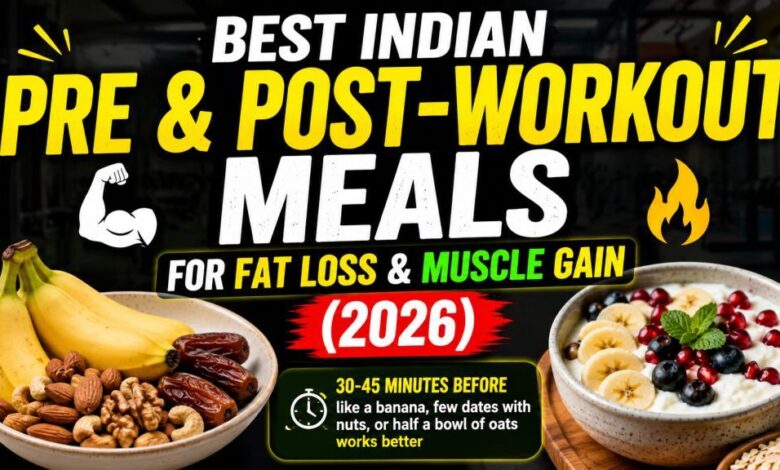
Morning trainers often can’t eat a full meal before exercise, so a small snack 30-45 minutes before like a banana, few dates with nuts, or half a bowl of oats works better. Evening trainers can have a fuller balanced meal 2-3 hours before, then a lighter snack if needed closer to the session. The mistake most people make is copying Western patterns but ignoring their own digestion; when you find your timing sweet spot, your body thanks you every workout.
The piece most guides skip is connecting this to actual Indian dishes you already have at home. We’ll fix that with a side-by-side comparison next so you can see what to pick and why.
Comparison table Indian pre/post-workout options side by side
| Name/Option | Key Feature | Best For | Limitation | Verdict |
| Banana + Peanut Butter (Pre) | Quick carbs + sustained fat/proteincinnamon | Morning or rushed workouts | May be heavy if eaten too close to training | Great all-round quick pre-workout snack |
| Poha / Upma with Veg + Curd (Pre) | Balanced carbs, light protein, easy digestion bigmusclesnutrition | 60-90 min pre gym or sports | Needs prep time, portion control for fat loss | Best for Indian home-cooked pre-workout meal |
| Moong Dal Chilla + Curd (Post) | High protein, moderate carbs, good recoverypallaviqslimfitness | Fat loss with muscle preservation | Requires cooking; may feel light for bulking | Excellent post-workout for lean goals |
| Dal Khichdi with Veg (Post) | Comfort food, carb + protein comborefreshyourlife | Muscle recovery after hard sessions | Can be high carb if portions are large | Great post-workout meal if portioned right |
| Whey Shake + Fruit (Post) | Fast protein, simple carbstexashealth | Quick recovery when you can’t cook | Needs supplement, may not suit everyone | Very efficient, optional not mandatory |
For most 18-25-year-olds training 3-5 times a week, poha/upma with curd or roti with paneer works well as a pre-workout meal, and moong dal chilla with curd or dal khichdi with veg fits beautifully as a post-workout option. Whey shakes plus fruit are handy for tight schedules, but they’re not compulsory if you can plan your food and timing.
Real benefits with numbers and specifics
When you get your pre- and post-workout meals right, you’re not just “eating healthy”; you’re literally changing how much work your body can do and how it recovers. Pre-workout carbs and moderate protein taken 1-4 hours before training help maintain blood glucose and delay fatigue, improving performance in both strength and endurance sessions.
You’ll notice concrete changes: fewer dizzy spells, stable energy through sets, and better ability to add weight or speed while still finishing the workout. When you do this consistently with a calorie deficit for fat loss, you’ll find that you lose fat without feeling constantly drained. Post-workout, studies show that consuming protein (around 20-30 grams) and carbs within a couple of hours supports muscle protein synthesis and faster recovery, which means less soreness and more visible muscle over time.
A benefit most articles ignore is mental. When your post-workout meal is planned, you’re far less likely to binge on junk food out of intense hunger after training. Over a month, avoiding those “I’ll eat anything” moments can easily save hundreds or thousands of calories and keep your fat loss on track.
Another specific plus: better future performance. Guidelines recommend daily carb intake in the range of 8-12 g per kg of body weight for high training loads, and sensible carb timing around sessions lets you meet these needs with Indian staples like rice, roti, and millets rather than fancy sports products. When your body’s fuel stores stay solid, your training progression stops stalling every few weeks.
Beginner mistakes most people make and the fix
Mistake 1: Training completely fasted, then overeating later
Many young people hit the gym or do intense home workouts on an empty stomach “for fat loss,” then wipe out the calorie deficit by attacking whatever food they see after. This happens because low blood sugar makes cravings explode later. A better approach is a small pre-workout snack with carbs and a bit of protein (banana + nuts, curd + fruit) so you perform well and can stay calm and selective with food afterward.
Mistake 2: Eating heavy, oily meals too close to training
This is the one you probably make without realising it. You eat paratha, biryani, or deep-fried snacks within an hour of your workout, thinking “food is fuel.” Heavy fat and big portions slow digestion and can cause reflux, gas, or nausea mid-session. The fix is to keep large meals at least 2-3 hours away and choose lighter, lower-fat options within 60 minutes of training.
Mistake 3: Ignoring protein in pre-workout and post-workout meals
Many beginners focus only on carbs like bread, rice, or biscuits and forget that muscles need amino acids to repair. This happens because “protein” still sounds like a bodybuilding word rather than a basic requirement. The consequence is slower muscle gain and more soreness. You can avoid this by including clear protein sources eggs, paneer, dal, curd, chicken, fish in both pre- and post-workout meals.
Mistake 4: Drinking too much water or energy drinks right before training
Some people slam a big bottle of water or sugary drink just before their workout. The human side: it feels like “preparation.” In practice, that can cause discomfort, side stitches, or bathroom breaks mid-session. Guidelines suggest spreading water intake 17-20 ounces 2-3 hours before, smaller amounts during exercise instead of chugging right before.
Mistake 5: Relying only on supplements and ignoring real food
It’s common to see beginners spend money on pre-workout powders and whey, but still eat random meals around them. Supplements can help, but they’re not magic. If you ignore regular food quality and timing, your results will be limited. A better pattern is: base your diet on good Indian meals, then use whey or a simple pre-workout drink as a convenient add-on when needed.
Mistake 6: Not adjusting meals for workout type and duration
People often eat the same pre/post-meal whether they’re doing a quick 20-minute session or a 90-minute heavy workout. Short workouts need lighter fueling; longer or more intense ones need bigger and sometimes intra-session carbs. If you train over an hour, adding 30-60 grams of carbs per hour (like raisins, sports drink, or simple snacks) can help maintain performance. Matching food to the session is what separates steady progress from random tiredness.
Read Also : Monsoon Diet for Gut Health (2026 Ayurvedic Guide)
Expert tips that actually work
Tip 1: Use the 3-1-0 rule for pre-workout meals
Think of your last three hours before training as zones: 3 hours before full balanced meal; 1 hour before small carb-protein snack; 0 (right before) only sips of water. This rhythm works because it respects digestion time while making sure you’re not under-fueled.
Tip 2: Aim for 20-30 grams of protein post-workout
Make “20-30 grams of protein” your post-workout north star. In practice, that looks like: 3-4 egg whites + 1 yolk, 100-150 g paneer, a big bowl of dal with roti, or 1 scoop whey plus some curd or milk. When you actually hit this target consistently, you’ll notice better muscle recovery and less soreness.
Tip 3: Keep fats low very close to workouts
Fats slow digestion. Near training, you want food to digest and move, not sit like a stone. So keep ghee/oil, butter, fried snacks, and heavy gravies away from the 60-minute window before exercise. This simple tweak often removes that “heavy stomach, low energy” feeling in your first sets.
Tip 4: Build “default” pre and post meals for busy days
Choose one go-to pre-workout snack and one go-to post-workout meal that you can repeat without thinking. For example: pre banana + handful of almonds; post moong dal chilla + curd. When life gets hectic, having these defaults stops you from skipping fueling altogether.
Tip 5: Train your digestion as much as your muscles
Your stomach adapts to what and when you eat around workouts. Start with something light, see how your body behaves, then adjust portions and ingredients. Over a few weeks, you’ll know exactly how much poha or oats you can handle without discomfort. Treat this like a personal experiment, not a one-time rule.
Tip 6: Use simple Indian drinks for hydration and recovery
You don’t always need fancy sports drinks. Water, nimbu pani, coconut water, and buttermilk can do a great job of keeping you hydrated and replacing electrolytes, especially in hot climates. A small turmeric or ginger tea after workouts can also help with perceived soreness and comfort.
Tip 7: Adjust total calories for fat loss vs bulking
The same pre/post meals can work for both fat loss and muscle gain; what changes is portion size and overall daily calories. For fat loss, keep portions moderate and watch evening snacking; for muscle gain, increase complex carbs and protein slightly at main meals while keeping quality high.
Tip 8: Don’t be scared of carbs if you train hard
If your workout is intense and regular, carbs are allies, not enemies. They refill muscle glycogen and help you push harder. The key is timing and type: more complex carbs (oats, brown rice, roti, millets) and less refined sugar, plus placing them near workouts rather than late-night mindless snacking.
Advanced insights what nobody else tells you
Insight 1: The “best” pre-workout is specific to your digestion
Guidelines say “carbs + protein,” but how that feels in your body depends on your gut, stress, and training style. Some people do great on banana + peanut butter; others feel better on light oats or curd with fruit. Recognising this saves you from blindly copying someone else’s pre-workout and blaming yourself when it doesn’t feel right.
Insight 2: Post-workout habits shape your whole diet
If your first move after training is grabbing a random snack or scrolling while starving, you’re likely to overeat. But if your post-workout plan is fixed like “I come home, drink water, then eat dal khichdi with veggies” your entire evening pattern changes. You’re calmer, less reactive, and less likely to reach for junk. The meal is not just food; it’s a routine anchor that steadies your decisions.
Insight 3: Hydration timing is more important than fancy drinks
Almost every beginner obsess over brand names and “BCAA drinks” while forgetting basic water timing. Simple guidelines like drinking 17-20 ounces of water 2-3 hours before, some during, and enough after to match sweat loss can transform how your workouts feel. Often, what you thought was “bad stamina” is actually low hydration.
Insight 4: Pre/post-workout structure makes long-term consistency easier
When meals around workouts are predictable, it’s easier to build week-after-week consistency. That consistency is what truly shapes your body not one magical food. Once you realise that, you stop hunting for “secret foods” and start designing stable patterns: similar breakfast, similar pre-workout snack, similar post-workout structure, with variety inside those frames.
Frequently Asked Questions real searches, clear answers
What is the best Indian pre workout meal for fat loss?
A great Indian pre-workout meal for fat loss is a small carb-plus-protein combo that digests easily, like banana with a few almonds, poha with veggies, or curd with fruit. It should be eaten about 30-90 minutes before training and kept moderate in calories so your overall deficit stays intact while your workout still feels strong.
What should I eat after workout in Indian food for muscle gain?
For muscle gain, aim for 20-30 grams of protein plus carbs within 1-2 hours after training. Indian meals that work well include moong dal chilla with curd, paneer bhurji with multigrain roti, dal khichdi with veggies, or grilled chicken with sweet potato. These help refill glycogen and provide building blocks for muscle repair.
How long before workout should I eat my Indian meal?
If it’s a full meal (rice/roti, dal, sabzi), try to eat it 2-3 hours before exercise so it digests properly. If it’s a smaller snack, you can eat 30-60 minutes before like banana + nuts or yogurt with fruit. Very heavy or high-fat meals should be kept away from the immediate pre-workout window to avoid discomfort.
Can I drink coffee or tea as a pre workout with Indian meals?
Coffee or tea can be part of a pre-workout routine if they suit your body, as caffeine may improve alertness and perceived energy. However, pairing them with some actual food carbs and a bit of protein is usually better than relying on caffeine alone. Avoid very sugary or creamy versions close to training, as they can cause energy crashes or heaviness.
What is a good vegetarian Indian post workout meal?
Great vegetarian Indian post-workout options include moong dal chilla with curd, dal khichdi with mixed vegetables, paneer bhurji with multigrain roti, or sprout salad with buttermilk. These provide protein, carbs, and micronutrients, supporting recovery and muscle growth without meat.
Do I need whey protein if I already eat Indian food?
Whey protein isn’t mandatory if your normal diet already provides enough protein and you can time it properly around workouts. It’s mainly a convenience tool: useful on days you can’t cook or eat a full meal, or when you need quick protein after a session. If you prefer, you can rely on eggs, paneer, dal, curd, and other whole foods instead.
Can I train fasted for fat loss and still see results?
Some people do light to moderate cardio fasted and feel fine, but intense strength or HIIT sessions often benefit from a small snack beforehand. You can experiment: start with a light pre-workout, monitor your performance and hunger later, and decide what suits your body and schedule. Long-term fat loss depends more on total calories and consistency than on fasted vs fed training alone.
What should I drink after workout for recovery in India?
Water is the base; you can add coconut water, nimbu pani, or buttermilk to replace fluids and electrolytes, especially in hot weather. The key is to drink enough across the day, not just slam one big glass after exercise. If your session was intense and long, small sips of an electrolyte drink can help too.
Can I eat rice as a post workout meal if I’m trying to lose fat?
Yes, you can eat rice post-workout even during fat loss if portions are controlled and the overall day’s calories are in deficit. Combining rice with dal, lean protein, and vegetables makes it more balanced and satisfying. Many lifters and athletes use rice as a primary carb source and still get lean; timing and quantity are what matter.
Quick Summary take this away
Pre- and post-workout meals are not about fancy products; they’re about smart timing and combinations of Indian foods you already know. Before workouts, you want easily digested carbs plus moderate protein, taken roughly 30-90 minutes before training, or a fuller balanced meal 2-3 hours ahead. After workouts, you aim for around 20-30 grams of protein plus carbs within about 1-2 hours to support muscle repair and steady energy.
For an 18-25-year-old chasing fat loss and muscle gain, that looks like banana + nuts, poha with veggies, or curd with fruit before training, and moong dal chilla with curd, dal khichdi with veg, paneer bhurji with roti, or grilled chicken with sweet potato afterward. The real win is consistency: build default pre/post options that work for your digestion, then adjust portions and overall calories based on whether you’re cutting or gaining.
Your next move is simple: pick one pre-workout snack and one post-workout meal from this guide that fits your routine, test them for a week, and fine-tune based on how your body and training feel.
Conclusion
What you eat before and after your workout quietly decides how much power you have in the gym and how well your muscles recover afterward. When you align carbs, protein, and timing with your training, fat loss becomes smoother and muscle gain becomes more visible, even when you’re using only familiar Indian foods. Performance stops feeling random; it starts feeling supported.
Three things matter most: respect digestion timing (no heavy oily meals right before training), make protein a clear priority in your post-workout window, and build simple default meals you can repeat on busy days. Once those are in place, supplements and extras become optional rather than essential.
You’re absolutely capable of turning your training from “just effort” into real progress. Start with the next session: choose a smart pre-workout, plan a solid post-workout meal, and let your body show you the difference.



One Comment