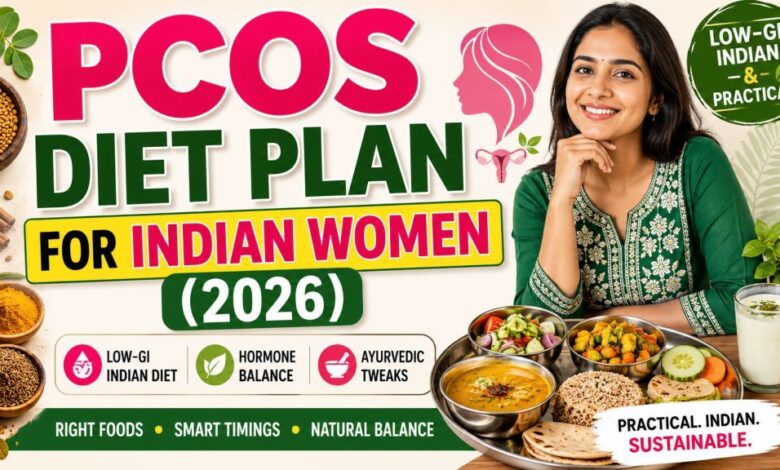
PCOS Diet for Indian Women: What to Actually Eat So Your Hormones Stop Screaming
If you have PCOS, you’ve probably been told some version of: “Just lose weight, eat healthy, and stress kam karo.”
Which is like telling someone whose house is on fire to “be more chill about it.”
Doctors who actually see Indian women with PCOS say the same three things over and over: most plans that work are low-glycemic, high in fibre and decent protein, and cut down refined junk so insulin stops going on a rollercoaster. Ayurvedic doctors, meanwhile, are quietly pushing warm, light, low-GI meals with spices like turmeric, cinnamon, cumin, and fenugreek, and a hard no to processed fried drama.
This guide is that overlap: PCOS, Indian food, Ayurvedic-ish logic, and your actual life. Not a fantasy schedule where you steam broccoli at 6 am.
Standard sanity disclaimer: This is guidance, not your personal prescription. PCOS is messy and individual. Always sync big changes with your gynaec/endocrinologist, especially if you’re on metformin, inositol, thyroid meds, or fertility treatment.
THE THING NOBODY ACTUALLY SAYS OUT LOUD
Nobody says this bluntly, but let’s: PCOS is not just a period problem.
It’s an insulin, inflammation, and “modern lifestyle plus genetics” problem with your ovaries caught in the crossfire.
Hospital and fertility-clinic diet plans spell it out:
- Many women with PCOS have some level of insulin resistance.
- High insulin pushes the ovaries to make more androgens (testosterone-type hormones).
- That means acne, facial hair, hair loss, irregular periods, cravings, and amazing mood swings for free.
The food part is not about “clean eating.” It’s about:
- slowing sugar spikes (low GI),
- calming inflammation,
- giving your liver and gut a break,
so hormones stop behaving like a badly written soap opera.
The PCOS internet will happily sell you:
- gluten-free everything,
- dairy-free everything,
- seed cycling with moon phases,
- ten supplements at once.
Indian doctors who actually treat PCOS keep it… much simpler:
- low-GI, high-fibre, high-protein diet,
- movement,
- stress management,
- sleep.
Indian PCOS diet plans repeatedly highlight:
- millets, legumes, vegetables, healthy fats, controlled whole grains.
- 25–35 g fibre per day to help insulin and hormones calm down.
- low-GI foods so blood sugar rises slowly instead of screaming.
Ayurvedic PCOS guides add more context:
- favour warm, freshly cooked sattvic meals,
- avoid processed, refined, and fried foods,
- use hormone-supportive spices like turmeric, cinnamon, cumin, fenugreek, and ginger,
- eat at regular times, not midnight chaos.
Here’s the main uncomfortable line:
If your PCOS diet is still built around white bread, tons of sugary chai, daily Maggi, and stress-snacking, no amount of “hormone-balancing” smoothie will save you.
Also, real talk: PCOS diet is not a 30-day “challenge.” It’s “how do I eat most of the time for the next decade so my body doesn’t hate me?”
Which is why you have to make it Indian, cheap, repeatable, and not emotionally miserable. Otherwise you’ll bounce right back to whatever the office canteen is selling and then blame your hormones again.
HOW THIS ACTUALLY WORKS THE REAL MECHANICS
Let’s join the dots between “low GI” jargon, your thali, and hormones actually calming down.
1. PCOS = insulin + inflammation + hormones
Most PCOS diet guides for Indian women now centre around three core facts:
- Insulin resistance makes your body overproduce insulin.
- High insulin triggers more androgen production, which messes with ovulation and cycles.
- Chronic low-grade inflammation makes all of this worse.
So your diet has to:
- keep blood sugar stable (low-GI, high-fibre, balanced meals),
- reduce inflammation (anti-inflammatory foods, less junk),
- support liver and gut (lighter, less-processed foods, spices, good fats).
2. What “PCOS-friendly Indian food” actually looks like
Hospitals, fertility clinics, and PCOS-specialist platforms all say roughly the same thing:
- Low-GI carbs: millets (ragi, jowar, bajra), brown rice, quinoa, oats, small portions of whole wheat, sweet potatoes.
- High-fibre foods: vegetables, fruits with peel where possible, legumes, beans, whole grains; target 25–35 g fibre/day.
- Good protein: paneer, curd, lentils, chickpeas, rajma, eggs, fish, lean chicken, tofu/soy.
- Healthy fats: nuts, seeds, ghee in moderation, coconut, sesame, avocado where available, omega-3 rich foods.
- Anti-inflammatory foods: green vegetables, nuts, seeds, ginger, turmeric, cinnamon, other spices, some fruits.
Ayurvedic PCOS diet descriptions add: prefer warm, light, freshly cooked sattvic meals; avoid processed, refined, fried foods; use plenty of hormone-supportive spices; hydrate with herbal teas like cumin-coriander-fennel (CCF), tulsi, cinnamon, spearmint.
3. What to dump or minimise
Lists across medical and Ayurvedic sources are boringly unified:
- High-sugar stuff: sweets, desserts, sugary cereals, sweetened yogurt, ice creams, packaged juices, sodas.
- Refined carbs: maida foods (naan, white bread, bakery, biscuits), too much white rice, sugary breakfast mixes.
- Fried/junk: pakoda, samosa, kachori, chips, instant noodles, frozen processed meals.
- Highly processed meat, trans fats, and “fake health” snacks loaded with sugar or refined flour.
Some Ayurvedic PCOS guides also suggest limiting or avoiding heavy cheese, red meat, cold and frozen foods, and sometimes cow’s milk depending on your digestion and Kapha dominance.
4. Timing and rhythm
Doctors and PCOS-specific clinics usually advise:
- 3 regular meals + 1–2 protein/fibre-rich snacks if needed,
- not skipping breakfast,
- eating your larger meals earlier in the day,
- early, lighter dinner.
Ayurvedic PCOS writers echo: regular meal timing, avoid overeating or very long gaps, early dinners (by ~7 pm), and no heavy late-night food.
In practice, a PCOS-friendly Indian diet is low-GI, protein-aware, fibre-heavy, and mostly home-style, with your chai–biscuit and sugar highs sharply downgraded from “daily ritual” to “occasional visitor.”
COMPARISON WHAT’S ACTUALLY DIFFERENT BETWEEN YOUR OPTIONS
Common PCOS Diet Styles Indian Women Try
| Option | What it actually does | Who it’s for | The catch |
| “Just eat less” / random dieting | Sometimes drops weight but barely helps hormones or cravings. | Panic mode after diagnosis | No focus on insulin, nutrients or cycle health. |
| Low-GI, high-fibre Indian diet | Steadies insulin, reduces cravings, supports weight and hormones. | Most women who want sustainable control | Needs planning and some cooking; slower but real changes. |
| Extreme low-carb / no grain | Faster weight and insulin shifts for some. | Highly motivated, with doctor supervision | Hard with Indian family food; easy to under-eat or binge. |
| “Remove dairy/gluten” without context | Helps a subset with specific sensitivities. | Those with gut issues, acne, or clear patterns with these foods | Not automatically needed for everyone; can become stressful & nutrient-poor. |
| Ayurveda-focused warm, sattvic plan | Supports digestion, agni, insulin and stress response. | Women who resonate with Ayurvedic lifestyle approach | Needs lifestyle shifts (sleep, stress, routine), not just food swaps. |
For most Indian women 18–35, the sweet spot is a low-GI, high-fibre, high-protein Indian diet with a few Ayurvedic tweaks not extreme restriction, not “eat whatever + supplements.”
WHAT ACTUALLY HAPPENS WHEN YOU TRY THIS
When you actually commit to a PCOS-friendly diet, the first thing that hits you isn’t your hormones.
It’s your kitchen and your social life.
You go from:
- chai + biscuits for breakfast,
- huge lunch with rice, little sabzi, lot of gravy,
- evening chai + something fried,
- random dinner or Swiggy,
to something like what PCOS clinics actually recommend:
- Warm water with lemon or methi, plus soaked nuts in the morning.
- Breakfast: besan/moong chilla, multigrain roti with paneer bhurji, or veg oats, maybe idli–sambar not plain bread and jam.
- Mid-morning: an apple, guava or papaya, or sprouts/black chana.
- Lunch: 1–2 multigrain/jowar/bajra rotis, dal or rajma, mixed veg sabzi, salad, curd.
- Evening: roasted chana, makhana, nuts, or veg chaat with green tea or herbal tea, not 4 cream biscuits.
- Dinner: lighter dal + veg, or a small millet khichdi, or brown rice + dal + sabzi not full biryani at 10:30 pm.
The surprising part, when you do this for a month or two (not three days):
- Your energy is more even. Less “dead by 3 pm then wired at midnight.”
- Cravings shift. High-protein, high-fibre meals actually do what reels promised; you don’t stalk the fridge every hour.
- PMS/PCOS symptoms (bloating, heaviness, some acne, period timing) often start to move in the right direction when combined with movement and stress work.
Ayurvedic tweaks can be weirdly soothing when you do them consistently instead of as a “detox sprint”:
- spicing food with turmeric, cinnamon, fenugreek, cumin, coriander to support blood sugar, digestion and inflammation.
- favouring warm, cooked foods over constant cold salads and iced coffee, especially if you’re more vata/kapha type.
- using herbal teas (cinnamon, spearmint, CCF, tulsi, triphala water) for cravings and bloat instead of more coffee.
One pattern other articles rarely admit: doing this well means saying “no” more often but not always how you expect.
You start saying:
- “No, I don’t want sugar in my chai,”
- “No, I’ll skip the soft drink,”
- but also: “No, I’m not going gluten and dairy free just because Instagram said so.”
Most women who find a stable rhythm with PCOS aren’t the ones doing the most extreme diet.
They’re the ones who:
- consistently choose low-GI Indian staples over junk,
- keep protein in every meal,
- don’t pretend their stress and sleep don’t matter,
- and let Ayurveda be a supportive layer, not a replacement for medical care.
You don’t wake up one day hormone-perfect. You just notice you recognize your own body again a little more each month.
THE ADVICE EVERYONE GIVES VS WHAT ACTUALLY WORKS
“Just lose weight and your PCOS will disappear.”
Weight loss can help, especially with insulin resistance and cycles, but it’s not a magic OFF switch.
Plenty of lean women have PCOS, and plenty of women still struggle with symptoms even after weight changes.
Doctors actually emphasise improving diet quality, insulin sensitivity, inflammation and lifestyle not just “eat less.”
Real alternative: focus on low-GI, fibre-rich, protein-forward meals, gentle calorie deficit if needed, and movement. Weight will often follow, but hormone health is the main track.
“Cut all carbs. Carbs are evil for PCOS.”
Extremely low-carb can help some women short term, but almost every sensible PCOS guide talks about complex, low-GI carbs, not zero carbs.
Millets, lentils, beans, vegetables, and controlled portions of whole grains are repeatedly recommended because they support hormones, fibre needs, and satiety.
Real alternative: cut refined carbs and sugar, not every roti in your life. Choose low-GI Indian carbs and pair them with protein and fibre for slower sugar release.
“Dairy and gluten are toxic for PCOS. Remove both.”
There are women who notice improvement (acne, bloating, cycles) after reducing dairy or gluten. But evidence and expert PCOS diet charts do not say every Indian woman with PCOS must go dairy-free and gluten-free by default.
Curd, paneer, and whole wheat rotis still feature in many doctor-created Indian PCOS diet plans.
Real alternative:
- Start with low-GI, high-fibre, anti-inflammatory eating.
- If you still have major symptoms, experiment with a structured 4–6 week trial of reduced dairy or gluten with guidance and watch your body, not Instagram comments.
“Ayurvedic herbs alone can balance hormones.”
Herbs like turmeric, fenugreek, spearmint, triphala, and others are cited as helpful for PCOS in Ayurvedic and integrative articles.
But those same sources pair them with low-GI, anti-inflammatory diet, movement, stress reduction, and proper sleep.
Real alternative: use herbs and teas as support not as a way to keep eating junk while hoping a capsule will “fix hormones.” Your ovaries are not that gullible.
THE PRACTICAL PART WHAT TO ACTUALLY DO
1. Build a PCOS plate template you can repeat
For lunch and dinner, follow what clinics now basically agree on:
- ½ plate: veggies (esp. green and non-starchy palak, methi, lauki, beans, bhindi, broccoli, cabbage).
- ¼ plate: low-GI carbs (1–2 small multigrain/millet rotis, or small brown rice/quinoa/ragi serving).
- ¼ plate: protein (dal, rajma, chole, paneer, curd, eggs, fish/chicken if non-veg, tofu/soy).
If your plate doesn’t roughly look like this most days, start there before chasing hacks.
2. Lock in 3–4 PCOS-friendly Indian breakfasts
Make mornings easy. Pick 3–4 from what doctors actually recommend:
- besan or moong dal chilla with green chutney,
- idli–sambar with minimal oil,
- vegetable oats upma,
- methi paratha with curd,
- multigrain roti with paneer bhurji.
Rotate them. No more chai + two biscuits as “meal.”
3. Choose your low-GI carb swaps once
Don’t re-think carbs daily. Decide:
- Roti: switch to multigrain/jowar/bajra/ragi 4–6 days a week.
- Rice: use smaller portions, and sometimes go for brown/red rice or millet-based khichdi.
- Snacks: replace kachori/samosa with roasted chana, makhana, nuts, sprouts, veg chaat.
Write these swaps somewhere you’ll actually see while cooking/ordering.
4. Add protein and fat to every meal (on purpose)
For each meal and snack, ask: “Where is my protein? Where is my good fat?”
- dal + curd,
- paneer in sabzi,
- sprouts or chana in bhel,
- nuts/seeds with fruit,
- a bit of ghee/coconut/sesame for satiety and hormones.
This controls cravings and stops the “suddenly need chocolate” spiral mid-afternoon.
5. Add 3–4 Ayurvedic hormone-support habits
Pick just a few, not all:
- start day with warm water + lemon or cinnamon/fenugreek (if ok with your doc).
- use more spices like turmeric, cinnamon, cumin, coriander, methi in normal cooking
- favour warm breakfasts and lunches over cold smoothies and iced coffee,
- sip herbal teas (spearmint, cinnamon, CCF, tulsi) instead of a third coffee.
These are small levers with outsized impact when repeated for months.
6. Fix one “when” before adding more “what”
You don’t have to perfect everything. Start with one timing fix:
- either: eat breakfast within 1–2 hours of waking,
- or: move dinner earlier and make it lighter.
PCOS plans emphasise early, regular meals and avoiding very heavy late dinners for both weight and hormone reasons.
QUESTIONS PEOPLE ACTUALLY ASK
What is the best PCOS diet plan for Indian women?
The most recommended pattern is a low-GI, high-fibre, high-protein Indian diet built around whole grains (especially millets and brown rice), pulses, vegetables, fruits, nuts and seeds, plus healthy fats.
Meals should stabilise blood sugar, lower inflammation and support healthy weight, not just “cut calories.”
Ayurvedic PCOS diets mirror this with emphasis on warm, freshly cooked sattvic meals and hormone-supportive spices.
Which Indian foods are best for balancing hormones naturally in PCOS?
Low-GI grains (millets, brown rice, quinoa), pulses (chana, rajma, moong dal), high-fibre vegetables, fruits like apples and guavas, nuts, seeds, paneer and curd, and anti-inflammatory spices (turmeric, ginger, cinnamon, fenugreek) are consistently recommended.
They help reduce insulin resistance and chronic inflammation, which are key drivers behind hormonal imbalance in PCOS.
Lifestyle pieces also mention spearmint tea, triphala, and CCF water as supportive, not standalone cures.
What foods should I avoid in a PCOS Indian diet?
Experts advise cutting back on refined carbs (maida products, white bread, large portions of white rice), sugary foods and drinks (desserts, sodas, packaged juices), fried snacks (samosa, pakoda, chips) and heavily processed/packaged foods.
These worsen insulin resistance, weight gain and inflammation.
Ayurvedic PCOS guides also warn against processed meats, excess cheese, and cold, stale foods.
Are millets really better than wheat or rice for PCOS?
Millets like ragi, jowar and bajra usually have a lower or moderate glycemic index and more fibre and micronutrients compared to refined white rice and maida.
Several Indian PCOS diet charts now include millets as preferred staples because they help stabilise blood sugar and improve satiety.
You don’t need to ban wheat or rice completely, but swapping in millets a few times a week is often helpful.
Is dairy good or bad for PCOS?
Research and expert opinion are mixed.
Many Indian PCOS diet plans still include low-fat curd, paneer and occasional milk as protein and calcium sources.
Some women notice acne or bloating with certain dairy, and some Ayurvedic sources suggest limiting heavy cheese and sometimes milk for Kapha-heavy PCOS.
A practical approach is: keep fermented/low-fat options like curd if tolerated, monitor your own symptoms, and trial reductions only if you suspect a clear link.
Can PCOS be reversed with diet alone?
Diet can dramatically improve PCOS symptoms and, for some women, restore regular periods, ovulation and metabolic health, especially when combined with movement and stress care.
Whether you call that “reversal” or “remission,” it usually needs ongoing maintenance; going back to old habits often brings symptoms back.
For many, best results come from a combination of diet, exercise, sleep, stress work and (when needed) medication.
How important is meal timing for PCOS?
Very.
PCOS diet guides stress regular meals, not long fasting paired with binge eating, and often recommend eating larger meals earlier in the day with a lighter, earlier dinner.
Ayurvedic PCOS advice underlines regular intervals, avoiding overeating, and finishing dinner by around 7 pm to support agni and weight control.
Wild, irregular timing tends to worsen cravings, mood and blood sugar.
Do I need supplements if I follow a good PCOS diet?
Some supplements (like inositol, vitamin D, omega-3) are commonly used in PCOS, but they’re optional add-ons to a solid food and lifestyle foundation, not shortcuts
If your diet already covers low-GI carbs, protein, fibre, healthy fats and anti-inflammatory foods, you’re addressing the core issues.
Always discuss supplements with a doctor who understands PCOS rather than self-prescribing a whole pharmacy.
SO WHERE DOES THIS LEAVE YOU
PCOS is not your fault, even if the first doctor visit made it sound like you personally invented insulin resistance.
It is now your long-term roommate, which means food can’t stay random forever.
You’ve seen the pattern across medical and Ayurvedic sources:
- low-GI, high-fibre, high-protein Indian meals;
- less refined sugar, maida and chronic fried food;
- more vegetables, pulses, millets, nuts, seeds and spices that actually respect your hormones.
If you want one concrete thing to do today, make it small and boring:
Pick one meal say breakfast and upgrade it to a PCOS-friendly version you can repeat (chilla, idli–sambar, veg oats, paneer roti). Do just that consistently for the next two weeks and watch what happens to your energy, cravings and mood.
It’s not perfect, it’s not a miracle, and it won’t fix every symptom alone.
But it’s the kind of quiet, repeatable change your hormones actually understand.
You made it to the end, which means you’re either very done with feeling out of control or very good at productive procrastination. Both are valid.
Either way, you now have more than “eat healthy” you have actual foods, plates and timings that line up with what doctors and Ayurvedic practitioners keep repeating for PCOS.
You don’t have to do all of it.
You just have to start with something you can keep doing on a bad week, not just on a motivated Monday.